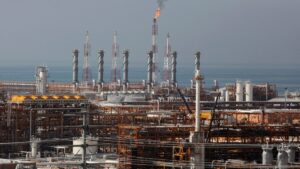
Introduction: The Compounding Weight of Simultaneous Wars
For over three years, Washington's strategic attention has been anchored to Eastern Europe. Russia's full-scale invasion of Ukraine in February 2022 triggered the largest Western military mobilisation since the Cold War, with the United States serving as the primary supplier of advanced weaponry, intelligence, and diplomatic support.
European allies, though increasingly shouldering the burden themselves, have largely done so by purchasing US-manufactured systems — from HIMARS rocket artillery to Patriot air defence batteries — and transferring them onward to Kyiv. The transatlantic defence industrial base has strained to keep pace, with ammunition production and equipment reserves running well below pre-war levels.
Then, on 28 February 2026, a new and enormously consequential conflict erupted. The United States and Israel launched Operation Epic Fury — a coordinated assault on the Islamic Republic of Iran with the stated aims of toppling the regime in Tehran, destroying its nuclear and ballistic missile programmes, eliminating its navy, and assassinating its senior leadership, including Supreme Leader Ali Khamenei. Within the first twelve hours alone, US and Israeli forces conducted nearly 900 strikes.
As of 17 March 2026, that conflict shows no signs of swift resolution. The Iranian regime, though grievously damaged, has retaliated with waves of ballistic missiles and drones against Israel and US military installations across the Middle East, the Strait of Hormuz is effectively closed, and American commanders are managing an active, high-intensity war on a second front — simultaneously with the ongoing commitments in Europe.
Has the window for a Chinese military move against Taiwan ever been more structurally advantageous from Beijing's perspective?
Operation Epic Fury: Weapons, Costs, and the Risk of Prolongation
2.1 The Offensive Arsenal
The scale of munitions expended in the Iran campaign has been extraordinary. According to US Central Command, Operation Epic Fury has drawn on more than twenty distinct weapons systems. Offensively, the United States has deployed Tomahawk Land Attack Cruise Missiles (TLAMs) — launched from Navy destroyers in the Arabian Sea — against hardened underground nuclear facilities and command-and-control infrastructure. The conflict has also marked the first operational combat use of the Precision Strike Missile (PrSM), a US Army long-range guided missile system designed to replace the ATACMS and strike fixed targets at ranges exceeding 500 kilometres. Additionally, the Low-Cost Uncrewed Combat Attack System (LUCAS), a drone modelled structurally on Iran's own Shahed-series loitering munitions, has been employed in large numbers against air defence radars and dispersed military targets.
Manned aviation has played a central role: F/A-18E/F Super Hornets operating from carrier strike groups in the Arabian Sea and F-35A/B/C Lightning II stealth aircraft — operating from both carrier decks and land bases — have conducted deep-penetration strikes against Iranian air defences, missile factories, and leadership compounds. The use of stealth platforms was essential given Iran's remaining S-300 and domestically produced Bavar-373 air defence systems.
2.2 The Defensive Burden
Iran's response has imposed a substantial defensive burden. Tehran launched hundreds of ballistic missiles and thousands of drones at Israeli population centres and at US military installations across at least six Gulf states. To counter this barrage, the United States has relied heavily on two layered systems: Patriot PAC-3 MSE batteries, which intercept ballistic missiles at lower altitudes, and Terminal High Altitude Area Defense (THAAD) systems, designed to intercept threats in the upper atmosphere and at hypersonic approach speeds. Israel has employed both the Iron Dome and David's Sling, its medium-to-long-range interceptor designed specifically to defeat cruise missiles and large unguided rockets.
Each interceptor fired represents a depletion of finite stockpiles that cannot be replenished at speed. The US defence industrial base — already strained by three years of Ukraine support — is now asked to simultaneously backfill European allies' inventories and replenish its own rapidly emptying magazines in the Middle East. Senior Pentagon officials have noted publicly that production rates for both Patriot and THAAD interceptors remain far below consumption rates in active conflicts.
2.3 The Risk of Prolongation
What was initially framed by the Trump administration as a swift, decisive campaign has shown early signs of strategic drift. Iran's Islamic Revolutionary Guard Corps (IRGC) has struck at least 27 US military bases across the region, and for the first time in history, Iran has launched direct attacks against all six Gulf Cooperation Council states.
The Strait of Hormuz — the world's most critical oil artery, through which roughly twenty per cent of global petroleum passes — has been effectively closed, triggering an energy and food security emergency of global proportions. On 17 March 2026, Israel announced the assassination of Ali Larijani, Secretary of Iran's Supreme National Security Council. The conflict is, by any measure, not concluding on the timeline Washington envisaged.
The April Window: Meteorology as Military Doctrine
The Taiwan Strait is not a year-round operational environment. Its weather patterns — governed by alternating northeast and southwest monsoons, typhoon seasons, and significant wave height cycles — impose severe constraints on large-scale amphibious operations. As Ian Easton, one of the foremost Western analysts of a potential Chinese invasion, has established, there exist only two brief annual periods when weather conditions are genuinely permissive for the massed crossing of a contested strait by an amphibious fleet: April–May and October.
The logic is straightforward. From June through August, Taiwan is battered by typhoons and the southwest monsoon — frequent torrential rain, winds exceeding 20 metres per second, and significant wave heights that routinely exceed 3–4 metres. Between November and February, the northeast winter monsoon dominates, producing sustained high seas and fierce winds that would make amphibious landing craft operations extremely hazardous.
A US Naval War College report identified the operational windows as "May to July and October" — though the spring window is typically considered to open from late March and reach optimal conditions in April. Scientific literature confirms that winter conditions, with significant wave heights regularly exceeding 3 metres, would impose severe operational penalties on unprotected amphibious vessels. April represents the inverse: the most benign conditions the strait offers for large-scale amphibious transit.
April is not merely a matter of mild weather. It is, in the language of military planning, the crossing window — the moment when nature briefly suspends the strait's role as Taiwan's most reliable natural defender.
Beijing's Strategic Calculus: The Temptation of the Moment
4.1 A Distracted Guarantor
The United States' credibility as Taiwan's de facto security guarantor rests not only on stated commitment but on demonstrated capacity to respond. Both are now under significant pressure. American military assets — carrier strike groups, long-range precision munitions, air defence interceptors, and logistics chains — are actively engaged on two fronts simultaneously. President Trump has not committed publicly to Taiwan's defence. The Foreign Affairs assessment from February 2026 is striking: China is now convinced it is unlikely to see a US president more indifferent toward Taiwan than Donald Trump.
4.2 Depleted Stockpiles and a Strained Defence Industrial Base
Perhaps most consequential from a purely military perspective is the state of the US and allied munitions inventory. Three years of Ukraine support, combined with an active and high-intensity campaign in Iran, have placed enormous strain on the defence industrial base. The systems most needed to contest a PLA assault on Taiwan — Tomahawks, PAC-3 MSE interceptors, THAAD missiles, Joint Air-to-Surface Standoff Missiles (JASSM), and advanced anti-ship munitions — are precisely those being consumed in greatest volume by Operation Epic Fury. RAND Corporation has previously warned that the US would struggle to prevail in a Taiwan conflict under current force balances; that calculus has only worsened.
4.3 China's Military Modernisation and the Davidson Window
Chinese military capability has continued to develop rapidly. The PLA commissioned its third aircraft carrier in 2025, launched a new generation of amphibious assault ships, and has reportedly deployed specialised landing barges designed explicitly for the beaches of western Taiwan. Exercises throughout 2025 increasingly rehearsed the precise operational sequences required for a Taiwan campaign.
The so-called "Davidson Window" — the period identified by former US Indo-Pacific Commander Admiral Phil Davidson and confirmed by CIA Director William Burns — suggested Xi Jinping had instructed the PLA to be ready for a Taiwan operation by 2027. As of 2026, that deadline is imminent.
4.4 Reduced PLA ADIZ Activity: A Telling Signal
In an intriguing development, AEI and the Institute for the Study of War noted in their March 2026 update that PLA incursions into Taiwan's Air Defence Identification Zone dropped to their lowest level since President Lai Ching-te took office — just 147 sorties in February, compared to a previous monthly average exceeding 300. While this may reflect seasonal patterns, it has prompted some analysts to consider whether quieter skies over Taiwan might precede, rather than follow, a period of escalation.
Constraints and Countervailing Factors
A balanced assessment demands acknowledgment of the significant factors that argue against Chinese action in April 2026, even from a military standpoint.
- Xi Jinping's anti-corruption campaign within the PLA has removed many senior officers, including members of the Central Military Commission and generals from the 31st Army Corps most knowledgeable about Taiwan operations. Military institutions weakened by purges are not optimal instruments for the most complex amphibious operation in modern history.
- Economic interdependence remains a powerful brake. China's economy, though increasingly resilient to external shocks, would face devastating sanctions if it moved against Taiwan.
- While the US may be distracted and depleted, it is not absent from the Indo-Pacific. Carrier strike groups, forward-deployed Marines, and the increasingly capable militaries of Japan, Australia, and the Philippines represent a significant collective deterrent.
- The Australian Strategic Policy Institute, writing in January 2026, concluded that an invasion in 2026 remains unlikely — that Beijing would more probably persist with coercion short of war. Most independent analysts continue to assign a less-than-even probability to a full-scale invasion in the near term.
Conclusion: The Most Dangerous Month in Years
The convergence examined in this paper is not, in itself, proof of imminent Chinese military action against Taiwan. Beijing has thus far chosen strategic patience, and the constraints on such an operation — military, economic, and political — remain formidable. But the analytical task is to identify when risk is elevated, not merely to confirm the absence of certainty.
By that measure, April 2026 represents the most structurally hazardous moment for Taiwan in the post-Cold War era. The United States is conducting an active, expanding war in the Middle East, consuming irreplaceable precision munitions and air defence interceptors. Its military leadership is managing simultaneous crises across three theatres. Its political leadership has sent ambiguous signals about commitment to Taiwan. And the Taiwan Strait's brief annual window of meteorological permissiveness is opening.
China has watched the United States become "bogged down" — first in Ukraine's shadow, and now in Iran's fire. From Beijing's perspective, the question is no longer theoretical: if not now, when? The answer may still be "not yet." But it has never been closer to "now" than in the coming weeks. As the spring campaigning season opens, Western policymakers and military planners would be well advised to treat April 2026 not as a routine operational period, but as a moment demanding maximum strategic vigilance across the Indo-Pacific.
Note: This paper was completed on 17 March 2026. All events referenced are current as of that date. Casualty figures and operational details reflect the most recent available open-source reporting.