Iran has reportedly shot down a Chinese-manufactured Wing Loong II unmanned aerial vehicle near the city of Shiraz in Fars province, according to Iranian state media outlet Tasnim and multiple open-source intelligence accounts circulating on 2 April 2026. The significance of the claim is not simply the shootdown itself — it is the identity of the platform.
The Wing Loong II is not an American or Israeli drone. It is a medium-altitude, long-endurance (MALE) combat UAV developed by China's Chengdu Aircraft Industry Group and exported primarily to Gulf states — most notably Saudi Arabia, which has deployed it in Yemen, and the United Arab Emirates, which was its launch export customer and has operated it in Libya. Neither Riyadh nor Abu Dhabi has made any public acknowledgement of operating assets over Iranian territory. If the wreckage can be attributed to either state, it would constitute the first confirmed evidence of covert Gulf state offensive engagement in the conflict.
The shootdown is currently based on reporting from Iranian state media (Tasnim) and OSINT social media accounts. No Gulf state has commented. Independent verification of operator identity has not been confirmed at time of publication. The Praevisio Institute assesses this as credible but treats official attribution as pending.
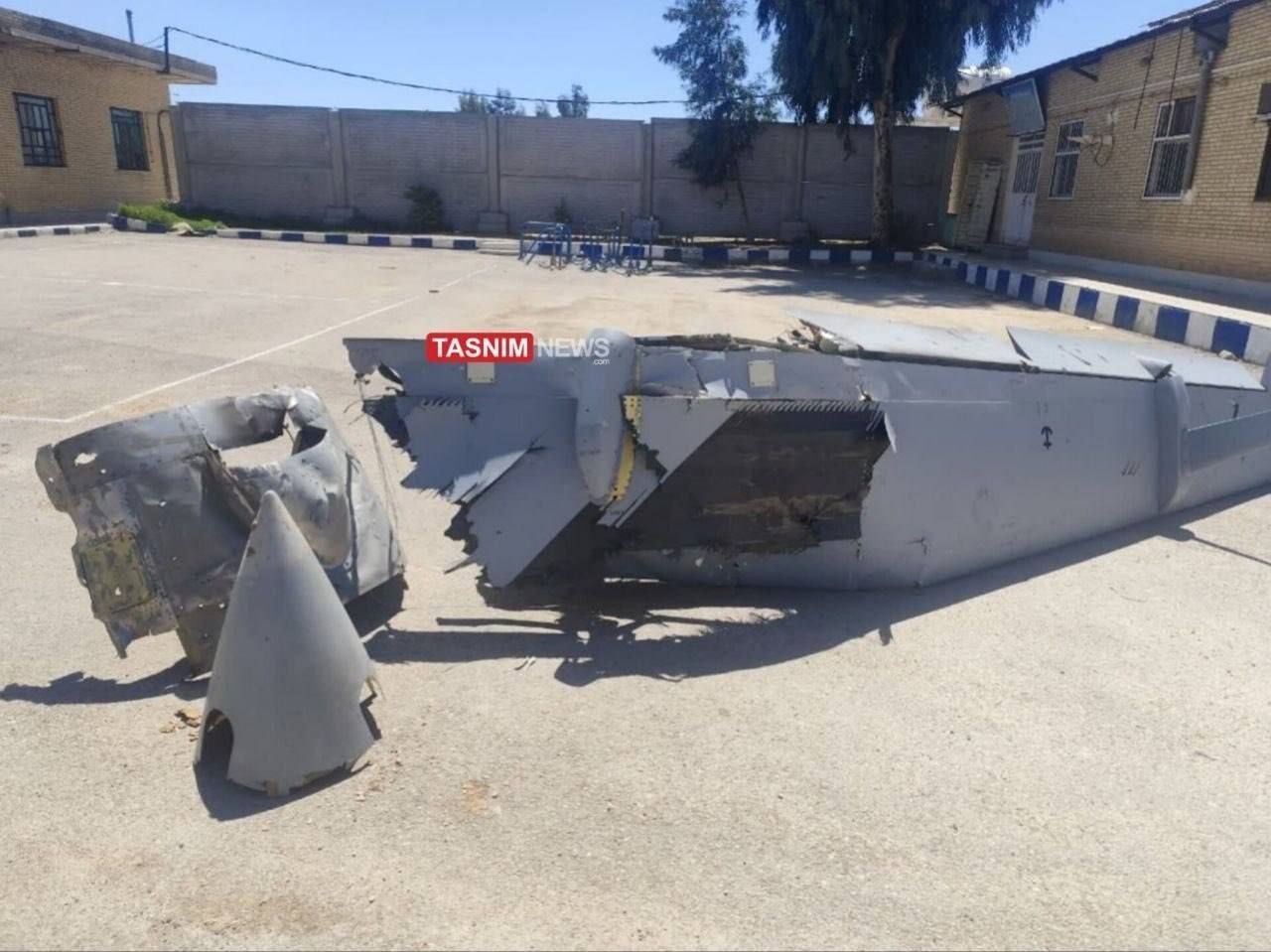
Image circulated by Tasnim and OSINT accounts on 2 April 2026. Physical characteristics of the airframe are consistent with the Wing Loong II profile. Source: Iranian state media.
What Is the Wing Loong II?
The Wing Loong II — formally designated the Chengdu GJ-2 — is China's most capable export-grade combat drone. Designed as an enlarged and substantially upgraded successor to the original Wing Loong I, it sits in the same operational class as the American MQ-9 Reaper: a platform capable of extended ISR missions and precision strike, without the political and operational constraints that US systems carry for their operators.
The platform's combination of satellite datalink, multi-sensor payload, and endurance makes it well suited to exactly the kind of deep-penetration ISR mission that would be required over Iranian territory — mapping air defence positions, tracking military movements, or providing battle-damage assessment after strikes. It is not a rushed procurement; both Saudi Arabia and the UAE have invested significantly in integrating the Wing Loong II into their order of battle over the past several years.
Prior Combat Use — Yemen and Libya
Neither the Saudi nor Emirati Wing Loong II fleets are untested. Both operators have employed the platform in active combat environments, providing relevant operational precedent for the kind of mission now alleged over Iran.
Saudi Arabia has deployed the Wing Loong II extensively in the Yemen conflict against Houthi targets — the same Houthi forces that have spent years trading fire with the US and Israeli navies across the Red Sea. The Royal Saudi Air Force used the platform for ISR and strike missions in Yemeni terrain where maintaining persistent air cover without risking crewed aircraft was operationally advantageous.
The UAE was the launch export customer for the Wing Loong II in 2017 and deployed it during the Libyan civil war in support of the Libyan National Army against the UN-recognised Government of National Accord. Emirati Wing Loong IIs conducted airstrikes and ISR missions from Al-Khadim air base in eastern Libya — a complex, multi-party conflict environment that demonstrated Abu Dhabi's willingness to use the platform in contested airspace far from its own territory. At least six Wing Loong IIs were reported shot down or lost in Libya, underscoring both the operational tempo and the attrition risk of deploying the platform in contested environments.
Both Saudi Arabia and the UAE have a demonstrated track record of deploying the Wing Loong II in active conflict zones outside their borders. The platform's use over Iran would be qualitatively different — but not operationally unprecedented for either air force.
Praevisio Institute AssessmentGulf States: Official Restraint, Growing Pressure
Throughout the conflict — which has been ongoing since late February 2026 — Saudi Arabia and the UAE have maintained an official posture of non-belligerence. Despite absorbing hundreds of Iranian missile and drone strikes on their own territory, including hits on civilian infrastructure, airports, and energy facilities, neither state has formally declared combat operations against Iran.
That restraint has come under severe strain. Iran struck all six GCC member states in the opening phase of the conflict — an unprecedented escalation that left deep political and military marks across the Gulf. The UAE alone absorbed the highest volume of Iranian strikes of any non-Israeli target during the initial days of fighting, with Iranian missiles and drones hitting Abu Dhabi's airport and landmark sites. Saudi Arabia's Foreign Minister, Prince Faisal bin Farhan, stated publicly that Riyadh's patience with Iranian attacks was "not unlimited" — a formulation that carries weight in Gulf diplomatic signalling.
Reporting from the Wall Street Journal in late March indicated that both states had taken steps that materially support the US campaign without crossing the threshold of formal belligerence: Saudi Arabia reversed an earlier position and agreed to allow US forces use of King Fahd Air Base for operations against Iran; the UAE moved to shut down Iranian-linked institutions in Dubai and threatened to freeze Iranian assets. These are significant steps. But operating combat drones over Iranian airspace would be of an entirely different order.
Iran Still Capable — And Now Has a New Pretext
The shootdown itself is a further demonstration that Iran's air defence network — despite weeks of sustained US and Israeli suppression — retains meaningful intercept capability. Early OSINT analysis has pointed to the Iranian-operated Khordad system as the likely weapon that downed the drone, consistent with Iran's pattern of using domestically produced or reverse-engineered medium-range SAM systems to claim shootdowns of ISR-class platforms.
More strategically significant than the method is the implication. If Tehran can credibly claim that a Gulf state has been running drones over Shiraz — deep inside Iranian territory, not near a border — it acquires a powerful propaganda and operational justification for intensifying strikes against Gulf infrastructure. Iran has already attacked all GCC states. It now has a narrative, if it chooses to use it, that frames those strikes as a response to covert Gulf belligerence rather than naked aggression. That reframing matters in terms of regional opinion, the posture of mediators such as Oman and Qatar, and any remaining diplomatic off-ramps.
The timing compounds everything. The alleged Wing Loong II shootdown lands four days before Trump's April 6 diplomatic deadline — a window already severely damaged by Iran's strike on Neot Hovav and the Israeli retaliation it will provoke. Each new layer of complexity, each new actor entering the operational picture, narrows the space available for a negotiated resolution further. A conflict that began as a US-Israeli air campaign against Iran has, if today's reports are accurate, now drawn in a third state covertly — and that dynamic, once established, is difficult to reverse.
This article was published on 2 April 2026. No Gulf state government has commented on the reported shootdown. Iranian state media has not issued formal attribution beyond the initial Tasnim report. Operator identity, mission profile, and point of origin remain unconfirmed. This is a developing story.