What Zaluzhnyi Actually Said
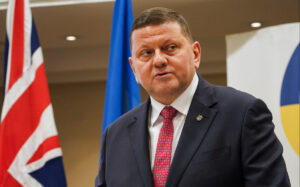
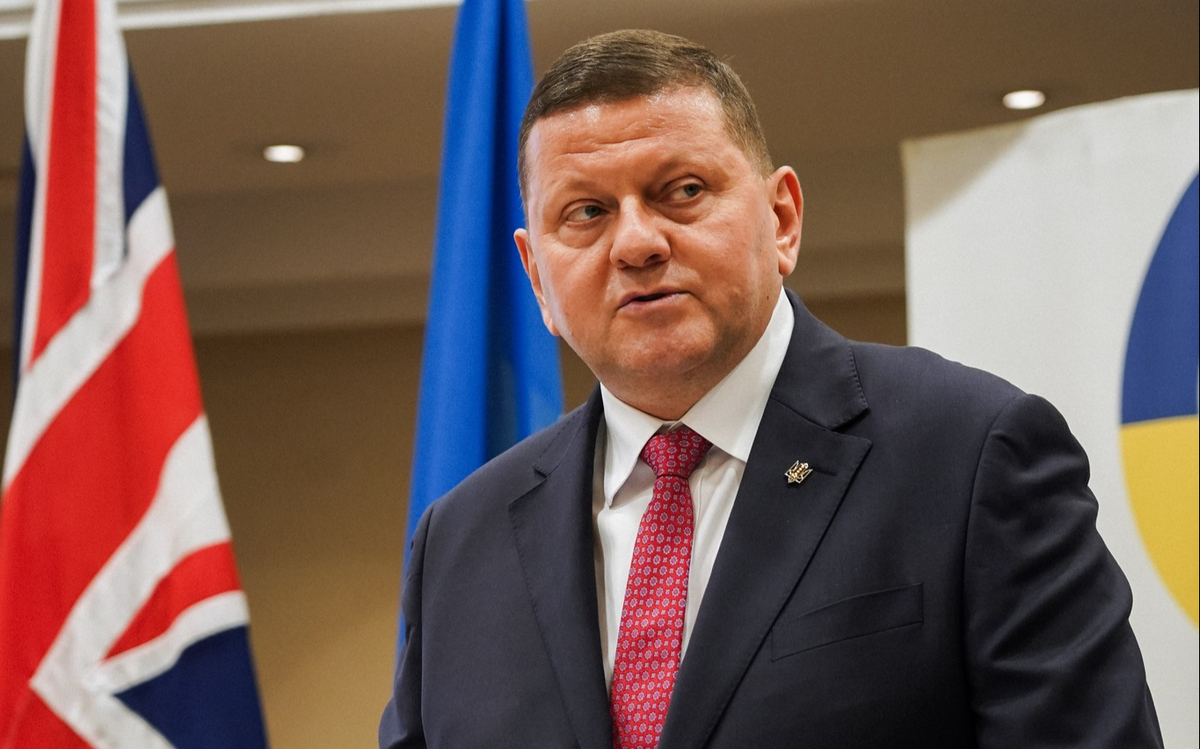
Speaking at a general meeting of Ukrainian ambassadors in Kyiv on 3 August, Valerii Zaluzhnyi did not soften the point. He described twelve years spent personally guiding Ukraine's armed forces toward NATO standards, and twelve years of hearing the same reassurance every single time, that membership was just around the corner. Unfortunately, he said, it will never happen. He argued the mismatch runs in both directions. Ukraine's armed forces, shaped and hardened by four years of full scale war, cannot realistically fold into an alliance he described as still operating on doctrines left over from the Second World War, while NATO itself shows no sign of evolving quickly enough to close that gap. He estimated it would take Ukraine roughly another twelve years just to reach half of Russia's current military capability, an assessment offered less as pessimism than as an argument for looking elsewhere.
That elsewhere, in his framing, is not a vacuum. Zaluzhnyi pointed to the Joint Expeditionary Force, the British led coalition that has built up its own governing structures since 2015, and to the possibility of an emerging European security architecture built independently of Washington. Ukraine's constitution still names NATO membership as a strategic objective, and President Zelensky has previously said Kyiv could accept postponing membership in exchange for solid security guarantees from the United States and its European partners. What makes Zaluzhnyi's comments notable is less the content, since versions of this argument have circulated among analysts for years, than the source. This is the country's most trusted wartime commander, formally serving as ambassador to one of NATO's most significant members, telling his own diplomatic corps that the goal they are paid to pursue does not exist.
Bucharest and the Split That Never Closed
To understand why Zaluzhnyi's comment lands the way it does, it helps to go back to April 2008, when President Bush arrived in Bucharest determined to place Ukraine and Georgia on NATO's Membership Action Plan, the formal on ramp toward accession. He did not get it. Germany, under Angela Merkel, and France both argued the move was premature and risked provoking Russia unnecessarily, and at least two other governments quietly shared that view even if they let Berlin and Paris carry the public weight of saying no. What emerged instead was a compromise that satisfied nobody fully. NATO issued a declaration stating that both countries would eventually become members, without granting either a concrete plan for getting there. Analysts have called it the worst outcome available, since it told Moscow exactly what the long term direction was meant to be while giving Kyiv and Tbilisi nothing resembling real protection in the meantime.
The pattern set at Bucharest proved durable. By October 2024, as President Zelensky pushed his Victory Plan and asked allies to formally invite Ukraine, reporting citing NATO and American officials identified at least seven member states still resisting the idea, including two of the alliance's most consequential members. Germany and the United States were described as slow walking the request, while Hungary and Slovakia opposed it outright, with Slovak Prime Minister Robert Fico warning that Ukrainian membership would provide, in his words, a good basis for a third world war. Belgium, Slovenia and Spain were characterised by one official as hiding behind Washington and Berlin, willing to voice abstract support while quietly hoping the question never actually reached a vote. Kyiv's presidential office publicly disputed the framing at the time, insisting that the idea of inviting Ukraine enjoyed overwhelming support among members. The dispute itself, over whether opposition was real or merely reported, has been a recurring feature of the debate for a decade and a half.
NATO's Bucharest declaration told Moscow that Ukraine would eventually join while giving Kyiv nothing that functioned as actual protection in the meantime. Sixteen years and one full scale invasion later, the alliance has still not resolved which half of that message it intended to keep.
A Red Line Flagged Well in Advance
What separates the Ukraine NATO question from an ordinary diplomatic disagreement is how clearly Russian intentions were communicated beforehand, and how far up the chain that warning travelled. Ahead of the Bucharest Summit, a memo sent by the American ambassador in Moscow told Washington plainly that Ukrainian entry into NATO represented the brightest of all red lines for the Russian elite as a whole, not simply for Vladimir Putin as an individual. Angela Merkel later recalled arriving at the same conclusion through her own channels, saying she was certain Putin would treat the move as tantamount to a declaration of war. Putin's own reaction at the summit reportedly included a warning that Ukraine, should it join, would do so without Crimea and its eastern regions, since the country would simply come apart first. None of this was hidden or ambiguous. It was recorded, understood by the officials who mattered, and set aside in favour of a declaration that promised membership without delivering it.
It is worth adding, since the point often gets lost in retrospective analysis, that Ukrainian public opinion at the time of Bucharest did not actually support NATO membership by a majority. That consensus was built over the following years, through a mixture of genuine political conviction, Russian aggression in Crimea and the Donbas that made the alliance's protection feel more urgent, and sustained encouragement from Kyiv's Western partners. Whatever one makes of that shift, it means the current generation of Ukrainians who came to see NATO membership as central to their national future inherited a policy goal that several of the very countries encouraging it were simultaneously working, quietly and consistently, to keep just out of reach.
This is the empirical core of the argument political scientist John Mearsheimer and other realist scholars have made since at least 2014, well before the full scale invasion. Their claim is not that Russia bears no responsibility for its own actions, but that NATO's eastward expansion, and specifically the open ended promise made at Bucharest, crossed a boundary Moscow had already made unmistakably clear, and that the war which followed cannot be understood honestly without accounting for that pressure. It remains one of the most contested claims in the entire field. Many Ukrainian officials, along with a large body of Western commentators, reject the framing outright, arguing that it treats Ukraine as an object of great power politics rather than a sovereign state entitled to choose its own alliances, and that it understates Russia's own long standing territorial ambitions, which predate NATO enlargement by centuries and would likely have found other pretexts regardless. Both readings continue to coexist in serious foreign policy debate, and neither has achieved anything close to consensus.
President Trump offered his own blunt summary of where things stand in February 2026, telling reporters that Ukrainians could forget about NATO membership and suggesting that expectation was probably the reason the war started in the first place. Whatever one makes of the historical argument, a sitting American president publicly closing the door on membership, sixteen years after Bucharest first opened it, is itself a data point Zaluzhnyi's own remarks now sit alongside rather than ahead of.
What the Admission Actually Changes
Zaluzhnyi's remarks do not alter the legal status of Ukraine's NATO bid, which remains, on paper, an active application and a stated constitutional goal. What they change is the honesty of the public conversation around it. For years, Ukrainian officials have had strong incentives to keep the membership question alive rhetorically, both to sustain domestic morale during an exhausting war and to preserve leverage in negotiations with Western partners who might otherwise feel less pressure to offer alternative guarantees. Zaluzhnyi, no longer bound by an active command role and possibly positioning himself for a future presidential run, has less reason to maintain that fiction and, arguably, more reason to distinguish himself from a political leadership still using the language of eventual accession.
The practical question this raises is what actually substitutes for membership. Zaluzhnyi's own answer, a security architecture built around the Joint Expeditionary Force and a possible European alliance independent of Washington, remains far less developed than NATO's Article Five guarantee, and nothing currently on the table matches it in scope or credibility. That gap is likely to define the next phase of the debate far more than the membership question itself, which after fourteen years of consistent signals from Berlin, Paris, Budapest, Bratislava and, increasingly, Washington, has arguably already been answered. The tragedy, if the realist reading holds even partially, is not only that a war was fought partly over a promise several of the promise makers never intended to keep. It is that the country asked to do the fighting was among the last to be told.
Note: This article was completed on 4 August 2026 and reflects open source information available as of that date. The realist reading discussed in Section III is one contested interpretation among several and is presented here alongside the objections commonly raised against it, not as settled fact. This note does not constitute legal, investment, or policy advice.