A Rivalry Built on Real Interests
Lord Palmerston told the British Parliament in 1848 that nations have no permanent allies and no permanent enemies, only permanent interests. The observation predates modern international relations theory by a century, but it describes precisely what that theory later formalised. Realist scholarship treats the international system as anarchic, not in the sense of disorder, but in the technical sense that no higher authority sits above sovereign states to enforce agreements or guarantee anyone's security. In a domestic legal order, a contract broken can be taken to court. Between states, no such court exists with the power to compel compliance from a great power that decides its interests have changed. Every alliance, every partnership, every friendship between governments therefore rests, in the end, on the continued convergence of interest between the parties, not on sentiment, culture, shared history or professed values, because none of those things can be enforced once the underlying interest disappears. This is not cynicism for its own sake. It is a description of the actual incentive structure states operate within, whether or not their public rhetoric admits it.
Russian political culture has its own blunt version of the same idea, one considerably older than Palmerston's remark and still invoked by Russian leaders today. Tsar Alexander III is widely credited with telling his ministers that in the whole world, Russia has only two faithful allies, its army and its navy, and that everyone else would turn against it at the first opportunity. Vladimir Putin has cited the line approvingly and at length in public remarks,[1] treating it as an enduring statement of how Moscow should regard any partnership, including, implicitly, ones it currently maintains. The aphorism is popular in Russian political discourse precisely because it captures something realist theory treats as a general law rather than a specifically Russian pathology, that even a state's closest partners are conditional, and that only the state's own hard power is a reliably permanent asset.
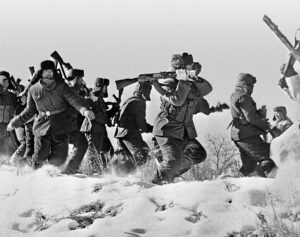
It is worth addressing directly the objection that modern conditions have made this framework obsolete. Advances in communication, economic interdependence, international law and a broad, if uneven, global improvement in human rights protections over the past half century have not repealed the absence of a world government capable of enforcing agreements between great powers. They have changed the tools available to states and the costs attached to certain kinds of action, but they have not changed the fundamental structure in which those states operate. The Sino-Soviet case is instructive precisely because it occurred well after the era of naked nineteenth century power politics, in a period increasingly organised around ideology, international institutions and, at least rhetorically, socialist solidarity, and the underlying calculation asserted itself anyway. The Sino-Soviet alliance of the early 1950s was genuine and consequential by any measure available at the time. The Soviet Union extended hundreds of millions of dollars in development loans to the new People's Republic, sent thousands of technical advisers to help build Chinese industry, and stood as China's principal patron through the Korean War and the earliest years of the Cold War. Within a decade, that partnership had curdled into something closer to enmity, and the reasons were not sentimental. They were structural. Nikita Khrushchev's break with Stalinist orthodoxy after 1956 threatened Mao Zedong's own ideological legitimacy and positioning as a rival claimant to leadership of the global communist movement. Territorial grievances rooted in nineteenth century treaties that had ceded Chinese land to Tsarist Russia resurfaced as live political issues. Moscow withdrew its economic advisers from China in 1960, ending a decade of cooperation almost overnight. What followed was not simply diplomatic coldness. Both governments began treating the other as a genuine military threat, and by the second half of the 1960s that threat assessment was expressed in the most concrete terms available to a state, troop deployments along a shared border stretching more than four thousand kilometres.
More Divisions Facing Beijing Than Facing NATO
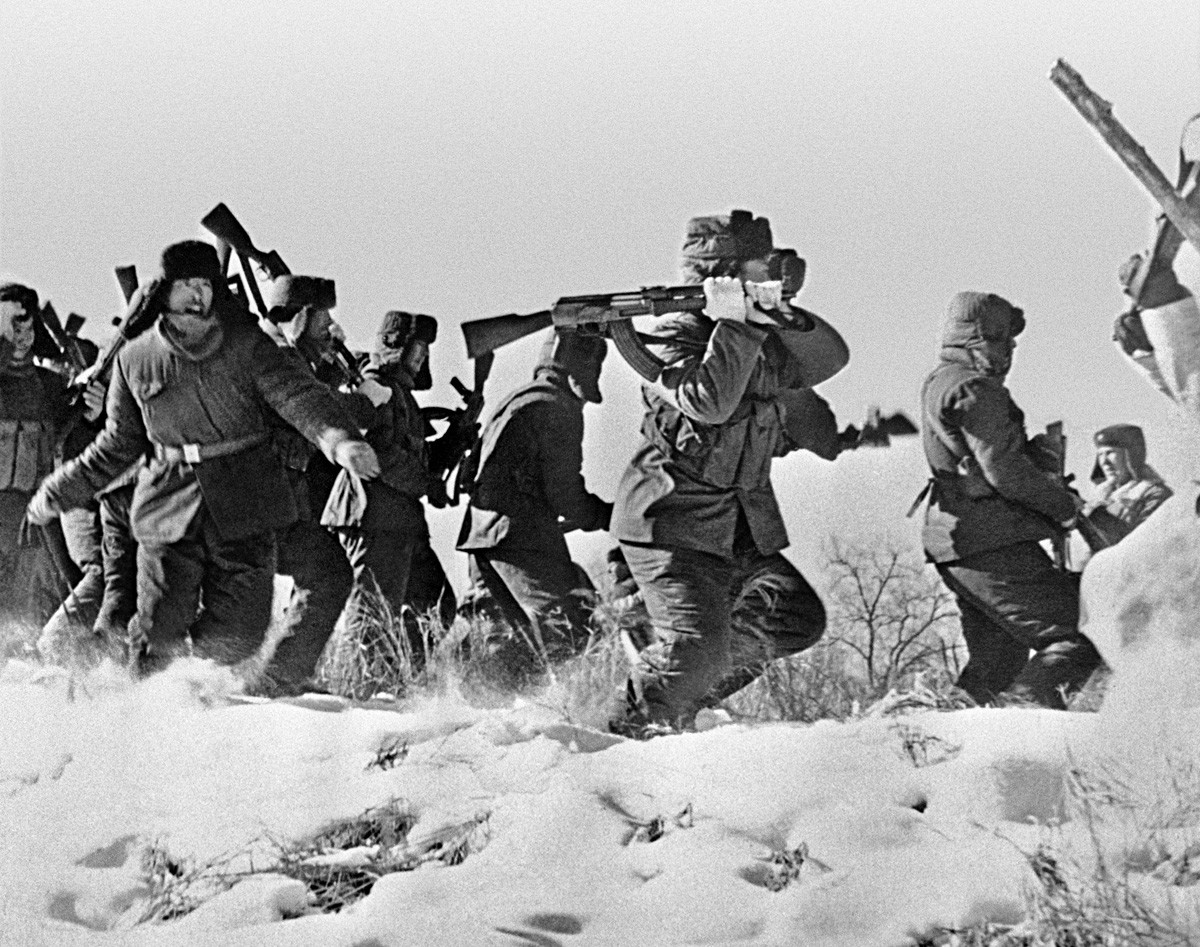
The scale of the Soviet military buildup along the Chinese border is not widely appreciated outside specialist circles, and it deserves more attention than it usually receives, not least because the evidence for it comes directly from declassified American intelligence files rather than secondary retellings. A Central Intelligence Agency special memorandum from March 1968 already tracked a significant quantitative and qualitative shift in Soviet posture near China over the preceding two and a half years, noting for the first time in two decades a genuine Soviet combat force taking shape in Mongolia, along with elements of the Strategic Rocket Forces earmarked for potential strikes against Chinese targets.[2] The trigger for the sharper escalation that followed was the Zhenbao Island incident of March 1969, when Chinese troops ambushed a Soviet border patrol on a disputed island in the Ussuri River. Moscow retaliated within weeks using artillery and armour, including previously secret T 62 tanks, and Soviet officials reportedly sounded out Washington on how the United States would react to a Soviet strike on China's nuclear facilities, a level of escalation risk that the National Security Archive's declassified record of the crisis documents in detail.[3]
The buildup did not stop with the immediate crisis. A later CIA assessment prepared for Henry Kissinger's National Security Council staff, declassified and published in the State Department's official historical record, found that Soviet ground forces opposite China had tripled since 1965 to a force of thirty seven to forty one divisions, roughly two hundred and ten thousand troops.[4] The same assessment concluded that this force already exceeded what would be needed to repel any realistic Chinese incursion, and stated plainly that, measured against Soviet deployments opposite other potential adversaries, the forces near the Chinese border were not excessive by comparison. That is a striking admission from Washington's own intelligence services, describing a Soviet military commitment against a former ally that had grown large enough to be judged on the same scale as the forces arrayed against NATO. RAND Corporation analysts studying Soviet risk taking in the Far East throughout the late 1970s and early 1980s reached similar conclusions about the durability of that posture, treating it as a structural feature of Soviet planning rather than a temporary reaction to a single border clash.[5][6]
How close the crisis came to outright nuclear war is itself documented in the American record, and it is the piece of this history that explains why Washington moved as quickly as it did. In August 1969, a Soviet embassy official in Washington approached a member of the National Security Council staff and asked, point blank, how the United States would respond if Moscow struck China's nuclear facilities. CIA Director Richard Helms confirmed to reporters around the same time that Soviet officials were canvassing other governments with the identical question.[7] Chinese leadership treated the threat as credible. In October 1969, on the order of Defense Minister Lin Biao, roughly nine hundred and forty thousand soldiers, four thousand aircraft and six hundred naval vessels were dispersed from their normal bases, Communist Party archives were moved out of Beijing, and top leadership relocated away from the capital in anticipation of a possible strike. According to later Chinese and American accounts of the episode, Kissinger warned the Soviet ambassador in Washington that any Soviet nuclear strike on China would be met with an American nuclear response against Soviet cities, a warning credited in retrospective Chinese official accounts with helping deter the attack.[8] It was against that backdrop, not a gradual diplomatic drift, that Nixon and Kissinger concluded by the end of 1969 that Beijing had made a strategic decision to seek rapprochement with Washington, a process that culminated in Kissinger's secret visit to Beijing in July 1971 and Nixon's own visit the following February.[9] China's willingness to reach out to a government it had denounced for two decades was not a change of conviction. It was the direct consequence of having just been shown, in the most concrete terms available, what its most immediate neighbour was prepared to consider.
By the mid 1970s the Soviet Union had positioned more troops against a country it had armed and financed only a decade earlier than it kept facing the alliance built specifically to contain it. Ideology did not decide that allocation of force. Proximity and threat did.
Washington's Turn to Exploit the Split
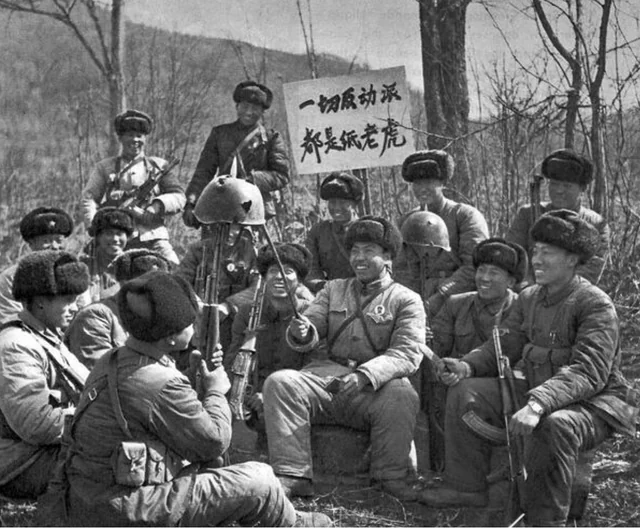
The United States watched this rupture develop and eventually moved to widen it deliberately. By the time Henry Kissinger made his secret visit to Beijing in the summer of 1971, Chinese leadership had concluded that the Soviet Union, not the United States, represented the more dangerous and immediate adversary. Nixon capitalised on that shift with a visit to China in February 1972, followed just months later by a summit in Moscow that produced the first Strategic Arms Limitation Treaty. The strategy became known as triangular diplomacy, built on the explicit premise that American interests were best served by maintaining better relations with each communist power than either maintained with the other.[10] Kissinger did not pretend otherwise to Chinese officials. In a February 1972 meeting with Premier Zhou Enlai, Nixon directly addressed the suspicion that Washington wanted conflict between the two communist giants, denying any such intention while doing precisely what critics accused him of, using the opening to Beijing as leverage against Moscow.[11]
This was not friendship in any meaningful sense, on any side of the triangle. It was three governments calculating, simultaneously and continuously, which pairing of relationships best served their own position relative to the others. China needed distance from a hostile northern neighbour and international rehabilitation after the catastrophes of the Great Leap Forward and the Cultural Revolution. The United States needed leverage to extract itself from Vietnam and to manage a Soviet Union it could not defeat outright. Neither side ever described the relationship in terms of shared values, because neither side believed that framing would have survived contact with reality.
The Same Logic, Applied to Germany and Russia
Washington's China strategy in 1971 was not an isolated maneuver. It was one instance of a recurring American grand strategic instinct, keeping the major powers of Eurasia apart from one another rather than allowing any combination of them to coalesce into a bloc capable of challenging American primacy. NATO's own first Secretary General, Lord Ismay, is credited with summarising the alliance's founding purpose, later confirmed in an official address by a German foreign minister marking the sixtieth anniversary of Germany's NATO membership, as being to keep the Russians out, the Americans in, and the Germans down.[12] The phrase was blunt enough that West German officials of the era found it uncomfortable, but it captured an honest structural goal, an American anchored Europe was safer for Washington than either a Europe dominated by an independent Germany or a Europe drawn into closer partnership with Moscow.
That instinct did not disappear with the Cold War's end. It found its most influential later articulation in the work of Zbigniew Brzezinski, President Carter's National Security Adviser and one of the most consequential American strategic thinkers of the post Soviet era. In his 1997 book The Grand Chessboard, Brzezinski argued that the central task of American foreign policy was to prevent the emergence of any Eurasian power, or coalition of powers, capable of challenging the United States for control of the continent that holds the majority of the world's population, resources and economic output. He identified Germany, alongside France and Russia, as one of Eurasia's decisive geostrategic players, and treated the possibility of a closer Franco German Russian axis as one of the specific outcomes American policy needed to prevent, since a Europe anchored to Russian energy and Russian markets rather than to Washington would erode the rationale for a continued American military presence on the continent. Anchoring Germany inside NATO and the American security umbrella, in Brzezinski's own framing, was not simply about defending Germany. It was about ensuring Germany never had sufficient reason to look east instead.[13]
The practical follow through on that doctrine is documented, not speculative. Leaked material from the American National Security Agency, made public beginning in 2013, showed that Washington had monitored German Chancellor Angela Merkel's mobile phone communications for more than a decade, according to German press reporting on the disclosed files, with a dedicated listening post reportedly operating from the American embassy in Berlin.[14] That reporting was later corroborated directly by the leaked NSA documents themselves. Files from the Snowden archive, reviewed jointly by Der Spiegel and The Intercept, showed Merkel listed in an NSA surveillance database alongside more than a hundred other foreign leaders, with over three hundred separate intelligence citations tied to her, and confirmed that the Foreign Intelligence Surveillance Court had issued a top secret order in March 2013 specifically authorising continued monitoring of communications related to Germany.[15] The surveillance became public during precisely the period in which Germany's energy relationship with Russia was deepening, and it prompted Merkel herself to demand an explanation directly from President Obama, who later said the disclosures had strained the relationship. German prosecutors opened a formal criminal investigation into the phone tapping in 2014, and subsequent leaks showed the surveillance extended to Merkel's ministers as well.[16] No official American document has been made public that states monitoring Merkel was undertaken specifically to track the pace of German Russian energy cooperation, and this connection should be treated as an informed reading of the evidence rather than a confirmed fact. But the timing and the target are consistent with exactly the priority Brzezinski's doctrine had already made explicit two decades earlier, that a Germany drifting into closer alignment with Russian energy and Russian markets was a development significant enough for Washington to want early and precise warning of, regardless of the diplomatic cost of being caught monitoring an allied head of government at that level of detail.
Why the Same Logic Now Points the Other Way
What makes this history worth revisiting is not the rivalry itself but how completely the underlying calculation has reversed, using the identical logic that produced the original hostility. Two national interest assessments, each internally rational in its own era, have simply landed on opposite conclusions as the surrounding facts changed.
The hostility of the 1960s and 1970s made sense because each side genuinely believed the other posed the more proximate threat to its core security, a belief backed by real troop movements, real border clashes and real ideological competition for leadership of the communist world. Alignment today makes equally rational sense because that specific configuration of threats no longer exists. Russia's full scale invasion of Ukraine and the sanctions regime that followed have made Chinese markets, technology and diplomatic cover close to indispensable for sustaining its economy and its war effort, a dependency neither government denies and one both now describe openly as a partnership without limits. China, for its part, faces a strategic rivalry with the United States over trade, technology and the future of Taiwan that dwarfs any residual concern about its northern border. A stable, cooperative Russia supplying discounted energy, absorbing Western pressure, and providing diplomatic ballast at the United Nations is now strategically far more valuable to Beijing than a contested four thousand kilometre frontier ever was a source of danger. Neither government currently treats the other as its principal threat. Both treat the United States that way, which was precisely the condition that made their earlier rivalry rational in reverse, since each had once needed distance from the other to manage a different primary danger.
This is the part of realist theory that gets lost in most popular retellings of the Cold War. States do not choose partners because of history, culture or professed values. They choose partners because of where the greatest threat to their position currently sits, and that location moves. The Soviet Union treated China as an emerging danger precisely when Beijing was weak, isolated and unpredictable, then Russia's successor state came to treat a vastly more powerful China as an essential partner precisely because Washington had become the sharper constraint on its options. Both postures were rational responses to real conditions. Neither reflected a fixed national character on either side.
The volatility is not confined to Moscow and Beijing. Washington's own relationship with Russia illustrates exactly the same principle over an even shorter span. In May 2010, seventy five American soldiers from the Second Battalion, Eighteenth Infantry Regiment marched through Red Square alongside Russian troops in Moscow's Victory Day Parade, the first time an active duty American unit had ever done so, part of a wider contingent that also included British, French and Polish forces marking the sixty fifth anniversary of the defeat of Nazi Germany.[17] It was a genuine high point in the post Cold War reset between Washington and Moscow, arranged in earnest rather than as theatre. Barely a decade and a half later, the two governments regard each other as principal adversaries across nearly every theatre that matters, from Ukraine to arms control to cyber operations. Nothing about either country's culture or values shifted in that period. What shifted was the interest calculation on both sides, precisely the mechanism this assessment has traced through Beijing, Moscow, Berlin and Washington throughout. States that marched together in Red Square one decade can find themselves in open confrontation the next, not because anyone lied about their intentions in 2010, but because intentions in an anarchic system are never a fixed commitment. They are a running tally, revised as the underlying interests shift.
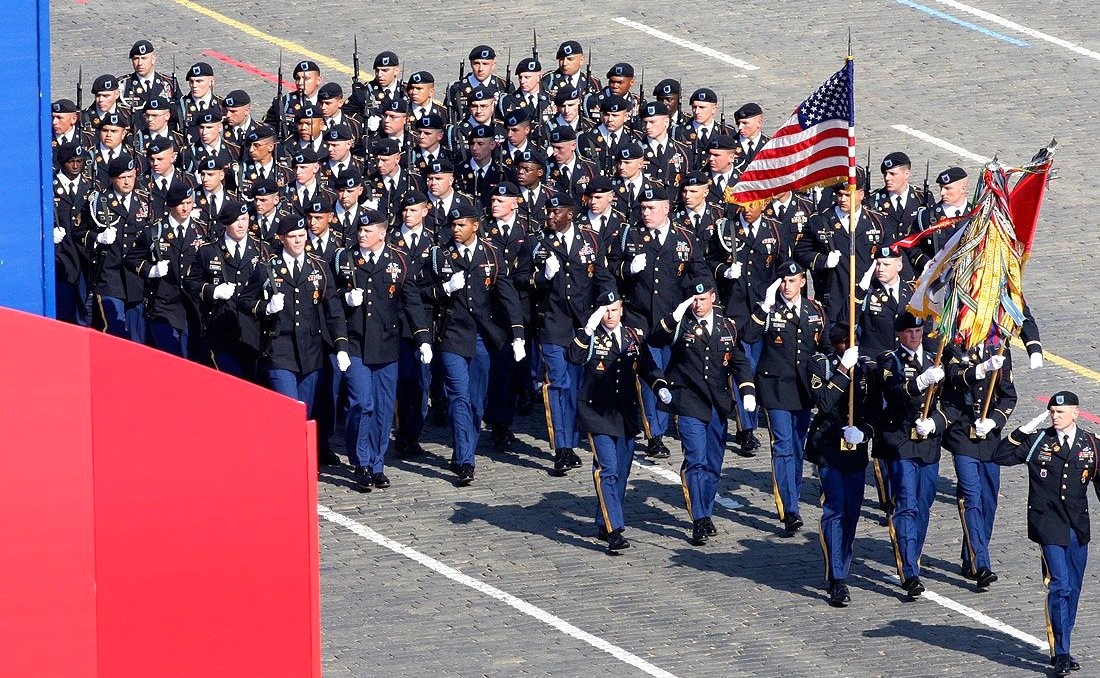
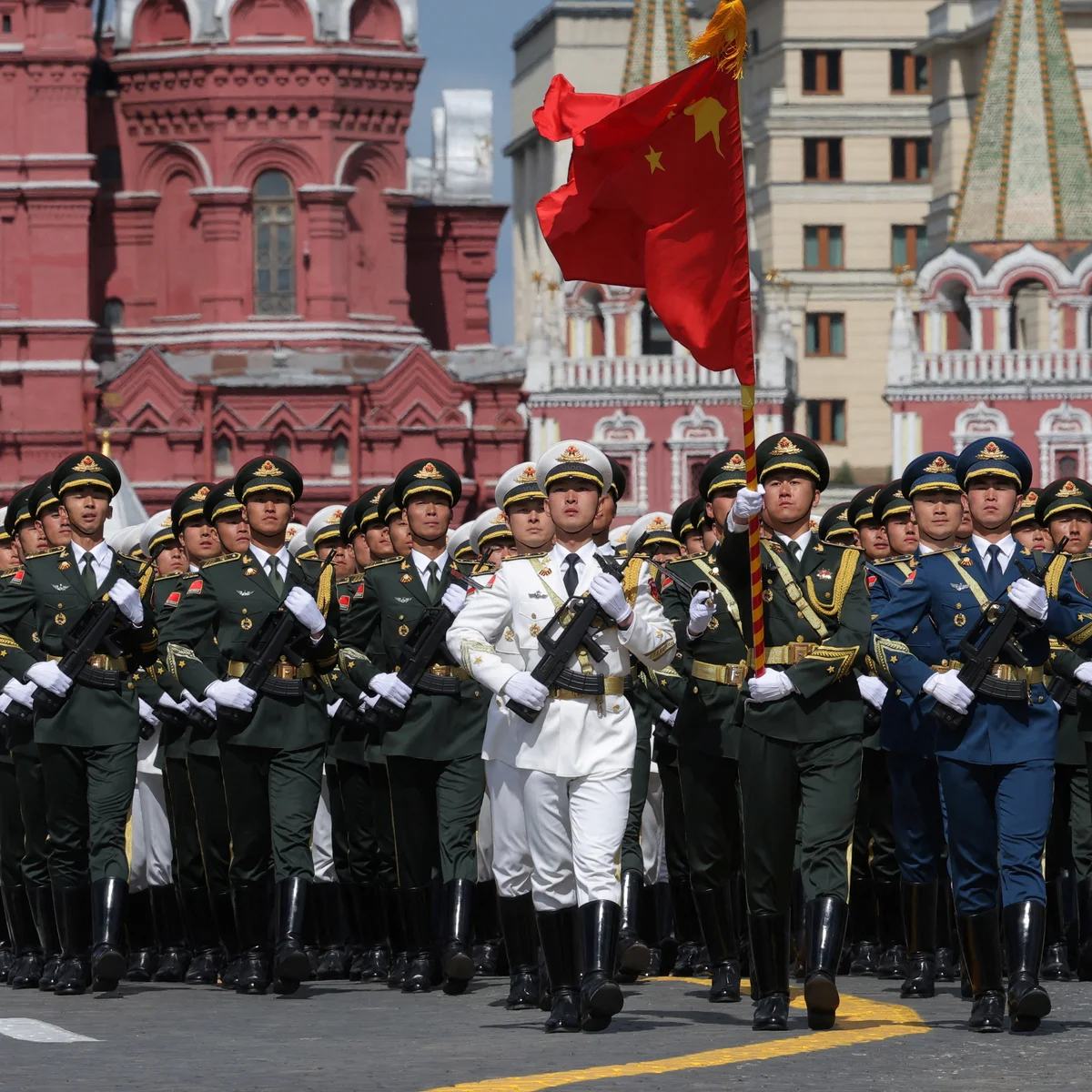
The same square tells the Sino-Soviet story in reverse. Fifteen years after those American soldiers marched through Red Square, and roughly five decades after Soviet and Chinese troops were killing each other along the Ussuri River, it was the People's Liberation Army's own Guard of Honor marching through that same square instead, on May 9, 2025, as part of the parade marking the eightieth anniversary of victory in the Great Patriotic War. Chinese state media described the formation as a tribute to China-Russia friendship, and President Xi Jinping attended in person alongside President Putin, having last sent PLA honor guards to a Moscow parade in 2015.[18] No Soviet general planning the nuclear contingencies of October 1969 could have anticipated Chinese soldiers marching under their own flag through the heart of Moscow half a century later, applauded rather than feared. The reversal is not an accident of history. It is the same interest calculation this assessment has traced throughout, now completing a full circle in the literal place where the earlier hostility might once have ended in nuclear war.
Europe Is Learning This the Hard Way, Not the Easy Way
The broader implication extends well beyond Moscow and Beijing, and Europe is not a hypothetical example of the risk. It is the case currently in progress, and the specific error it illustrates is worth stating plainly.[19] Every government in this account, Soviet, Chinese and American, treated its partnerships as conditional. Europe, alone among them, spent decades treating its relationship with the United States as something closer to permanent, a structural feature of the postwar order rather than a policy choice Washington could revise once its own calculation of relative interest changed. That was always a category error given the argument set out above. No government in this account, including the United States itself when it dealt with Moscow and Beijing, has ever actually operated that way. Europe was the exception, and it is now the one paying the adjustment cost.
Warnings that the relationship rested on interest rather than permanence were available for years. French President Emmanuel Macron began arguing for European strategic autonomy from the United States as early as 2017, explicitly on the grounds that Washington's priorities were shifting and that Europe could not assume the same American commitment indefinitely. That warning went largely unheeded. What changed European behaviour was not foresight but a sequence of direct shocks to the relationship itself, and by 2026 those shocks had accumulated across trade, war funding and territorial pressure alike.
On trade, Washington moved unilaterally rather than in consultation. In July 2025, the United States set tariffs on most European exports at fifteen percent, ten points above the prior baseline, in an agreement France's own prime minister described at the time as a dark day for the European Union and commentators across the continent called a capitulation.[20] On Ukraine, the reversal of who pays was just as direct. Where the 2024 Washington NATO summit had featured an explicit allied commitment of roughly forty three billion dollars a year in military support for Kyiv, the 2025 summit in The Hague dropped any comparable benchmark entirely, replacing it with pressure on European members to lift defence spending toward five percent of GDP and to purchase American made weapons for onward transfer to Ukraine.[21] President Trump made the shift explicit himself, telling European leaders directly that Washington's prior assistance, which he put at 350 billion dollars, had never been billed to them, and that this had now changed. Now they pay, he said of Europe, Europe pays. The mechanism followed quickly. Washington began selling weapons to NATO for transfer to Ukraine on European funds rather than supplying them directly, a reversal from a war in which American taxpayers had financed the bulk of Kyiv's defence to one in which European taxpayers now finance American arms production for the same purpose.[22] Layered on top of the November 2025 National Security Strategy that described Europe in terms closer to an economic rival than a partner, the early 2026 Greenland crisis in which Washington pressured Denmark over the territory while declining to rule out force against a treaty ally, and an American and Israeli campaign against Iran conducted without meaningful NATO consultation despite its direct exposure for European interests, the pattern became difficult to read as anything other than a broad and deliberate recalculation of what Europe was actually owed.
Only after that direct evidence accumulated did European governments act. European Union defence spending rose by roughly sixty percent between 2020 and 2025, and NATO's European members recorded their fastest year on year increase in defence spending since 1953 during 2025 alone, according to the Stockholm International Peace Research Institute.[23] Members have since committed to a combined defence and defence adjacent spending target of five percent of GDP by 2035, and the EU has for the first time borrowed collectively to fund a joint rearmament facility aimed at rebuilding an industrial base allowed to atrophy over decades of dependence on American suppliers.[24] This is precisely the pattern the term reactive describes, and analysts tracking the shift have begun using that word explicitly. Commentary on Europe's defence push has warned that initiatives driven by external shocks to a specific relationship, rather than a prior and independent assessment of that relationship's limits, typically lack the durable political will needed for real transformation, pointing to the fate of earlier European defence integration efforts in the 1990s and 2000s, both of which gathered momentum during moments of alarm about American commitment and then faded once Washington's attention returned.[25] Foreign Affairs described Europe's own 2026 turn in similarly unflattering terms, noting that European governments are now doing things they ought to have done many years earlier, under duress rather than through foresight, specifically in relation to the United States rather than any other partner.[26]
This is the opposite of the proactive posture that would have served European interests best. A government acting proactively treats a shift in a specific partner's relative priorities as information to plan around before the cost of adjustment rises, in the way Nixon and Kissinger moved deliberately to exploit a shift in the Sino-Soviet relationship years before it fully matured, rather than waiting for a crisis to force the issue. A government acting reactively waits for the partner itself to demonstrate the shift through a direct and often humiliating episode, then scrambles to build in months what should have been built over a decade, at higher cost, with less coordination, and with an outcome still described by serious analysts as reversible if American attention ever swings back toward Europe on its own terms. Europe's mistake was never failing to notice that Washington's interests could change. It was assuming, uniquely among the governments examined here, that its own relationship with Washington was somehow exempt from that possibility.
The Choice That Remains
None of this means alliances are worthless or that current partnerships will necessarily dissolve. It means they persist only as long as the interests underneath them continue to align, and that European governments, like Chinese and Soviet governments before them, would be better served treating that alignment as something to actively maintain and hedge against, rather than as an inheritance that arrives automatically each year regardless of how the relative distribution of global power continues to shift. The unipolar order that made American protection feel unconditional for a generation is ending, not because Washington has become hostile to its former partners, but because a genuinely multipolar world requires every government, including the United States, to recalculate where its interests actually lie. States that mistake yesterday's alignment for tomorrow's certainty tend to discover the difference at the worst possible moment. Moscow and Beijing learned that lesson twice, in opposite directions, within the span of a single Cold War, and each time they adjusted before the cost of not adjusting became unbearable. Europe's current rearmament, welcome as it is, is proof that the lesson has finally landed in relation to Washington specifically. Whether it was learned early enough, and whether it will outlast the moment American attention drifts elsewhere again, remains the open question.
Note: This assessment was completed on 4 August 2026 and reflects historical research and open source information available as of that date. The realist framework applied throughout is one established school of international relations theory among several and is presented here as an analytical lens rather than a claim of predictive certainty. This note does not constitute legal, investment, or policy advice.