The Strike and Its Immediate Consequences
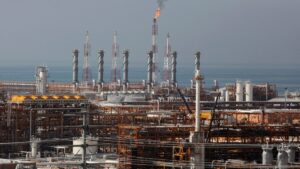
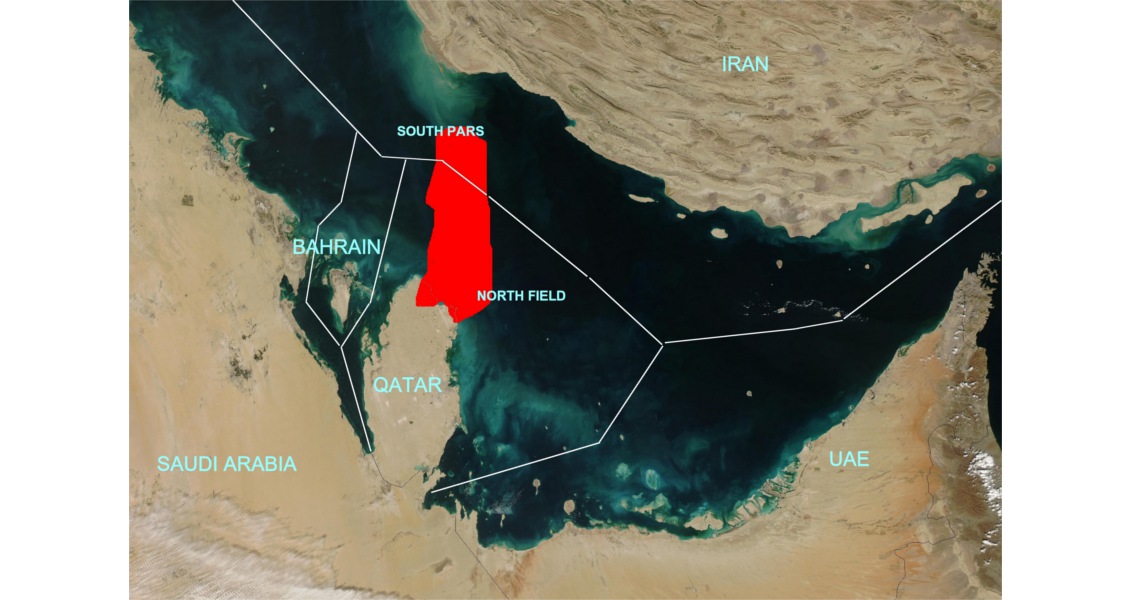
On 18 March 2026, Israeli forces carried out strikes against Iran's Pars gas field, the southern component of the world's largest natural gas reservoir.1 The Pars field shares its geological formation with Qatar's North Field across the Persian Gulf, and together these twin structures account for the largest concentration of natural gas on the planet.2 The attack represents a significant qualitative escalation in the Israel–Iran war, moving from military and nuclear infrastructure to the centrepiece of the Iranian energy economy.
Energy markets responded immediately, with prices rising on news of the strike. Historical precedent suggests that infrastructure attacks in the Gulf trigger rapid and disproportionate price responses, regardless of the actual volume of supply disrupted.3 With the Strait of Hormuz already effectively closed following Iran's retaliatory operations under Operation Epic Fury, global energy markets are now facing compounding disruption: both the transit route and a key production node have simultaneously been placed under threat.4
The attack represents a significant qualitative escalation — moving from military and nuclear infrastructure to the centrepiece of the Iranian energy economy. Nothing in the Persian Gulf sits beyond reach.
IRGC Threats and the Exposure of Gulf Infrastructure
The Iranian response has been rapid, if initially rhetorical. IRGC-affiliated media have called for the evacuation of the following Gulf energy installations as an explicit signal of forthcoming tit-for-tat retaliation:5
- The SAMREF oil refinery in Yanbu, Saudi Arabia6 — one of Saudi Arabia's largest export refineries, with a capacity of approximately 400,000 barrels per day.
- The Al Hasan gas field in the United Arab Emirates — a principal node in the UAE's domestic gas network.
- The Jubail petrochemical complex in Saudi Arabia7 — the world's largest petrochemical complex, operated by SABIC and Saudi Aramco affiliates.
- The Mesaieed Petrochemical Holding Company (MPHC) complex in Qatar8 — processing ethylene, polyethylene, and vinyl chloride monomer at significant scale.
Taken together, these four installations represent a cross-section of the Gulf Cooperation Council's (GCC) most economically significant energy infrastructure. A successful strike on even one of these targets would trigger energy price shocks of global magnitude and destabilise the very Gulf states that Israel maintains warm — if unofficial — relations with. This points to the central contradiction at the heart of Israel's current strategic posture.
Israel's Strategic Logic: Energy Warfare from a Position of Immunity
3.1 The Immunity Asymmetry
Israel's willingness to strike energy infrastructure — first Iranian, now potentially catalysing Iranian strikes on Gulf facilities — reflects a strategic position of near-total energy immunity. Israel's domestic gas supplies (the Leviathan and Tamar fields in the Mediterranean) are supplemented by pipeline imports from Egypt and Azerbaijani crude transiting Turkey's Ceyhan terminal.9 Israel has no dependence on Persian Gulf transit routes. It faces neither supply shortages nor price exposure from Hormuz disruption. It can therefore pursue energy warfare as a pure geopolitical instrument without bearing any of its economic costs.
3.2 The Gulf Hegemony Calculus
This asymmetry extends to Israel's relationship with the Gulf states themselves. Despite the Abraham Accords normalisation with the UAE and Bahrain, and despite the warm de-facto ties that have developed with Gulf monarchies over the past decade, Israel harbours a long-term interest in preventing any Arab state from emerging as a dominant regional power.10 The Gulf monarchies represent precisely the kind of wealthy, influential and resource-backed entities that constrain Israeli regional hegemony. A weaker Gulf — economically destabilised by Iranian retaliatory strikes on its energy infrastructure — would, from an Israeli strategic perspective, be a more tractable Gulf. This opposition to Gulf military empowerment has been demonstrated in practice: following the Abraham Accords, Israel actively lobbied Washington to block the transfer of F-35 aircraft to the UAE — a platform that had been offered as part of the normalisation incentive package — on the grounds of preserving its qualitative military edge in the region.11
3.3 The Hegemony Objective
Israel's long-term strategic objective is regional hegemony: the position of the undisputed dominant power in the Middle East, unchallenged by a nuclear-capable Iran, unconstrained by a powerful Arab bloc, and capable of projecting influence from a position of unrivalled military and economic superiority.12 The current conflict, deliberately prolonged and now deliberately extended to energy infrastructure, serves this objective with remarkable consistency.
Israel can pursue energy warfare as a pure geopolitical instrument without bearing any of its economic costs. It ignites a fire from which it alone is insulated.
The United States: Constrained, Conflicted, and Partially Complicit
4.1 Disregarded Warnings
The United States has found itself in an increasingly untenable position. Earlier in Operation Epic Fury, the Trump administration signalled to Israel that attacks on Iranian energy infrastructure were unwelcome — a recognition that energy price spikes would harm the U.S. domestic economy and undermine Trump's signature economic agenda.13 Those signals appear to have been disregarded. Today's strike on the Pars field suggests either that Israel calculated the U.S. would not act on its warnings, or that U.S. approval was quietly extended.
4.2 The Coalition-Building Calculation
The evidence points to the latter. The strikes are assessed to have been coordinated with the United States — and U.S. approval, even if reluctant, may reflect a secondary strategic calculation: that attacks on Gulf-adjacent energy infrastructure, and the resulting energy crisis, will compel European allies and energy-dependent Asian nations — particularly Japan and South Korea — to join military operations to reopen the Strait of Hormuz.14 15 From this perspective, the energy crisis is not a side-effect of the war but a deliberate instrument of coalition-building.
4.3 The Russian Oil Contradiction
This calculation is rendered deeply incoherent by a separate and proximate decision: the Trump administration's earlier partial lifting of sanctions on Russian oil, framed as a concession in the context of Ukraine negotiations.16 Washington is simultaneously enabling Russian energy exports — which undermined the sanctions architecture designed to constrain Moscow — while presiding over a campaign that is systematically destroying Middle Eastern energy infrastructure and choking global supply. It bears noting that the partial sanctions relief on Russian oil came after NATO allies and Asian partners declined the call-to-arms to reopen the Hormuz Strait — suggesting this was as much a reactive concession as an incoherent policy. Nevertheless, that the sanctions relief was explicitly motivated by a desire to dampen global oil prices makes authorisation of the Pars field strike — which predictably drove prices sharply higher — a direct act of self-sabotage, as an Iranian response is expected.17 The contradiction is not merely rhetorical: it represents a fundamental incoherence in U.S. energy and foreign policy that allies and adversaries alike are observing with alarm.
Israel's Lessons Learned from Gaza
Israel's current willingness to escalate — to strike energy infrastructure, to court Iranian retaliatory attacks on Gulf facilities, to prolong a war that the United States, the Gulf states, and much of the international community wishes to conclude — reflects a specific institutional learning from the 2023–2024 Gaza campaign. During that campaign, Israel repeatedly exceeded stated Western red lines and faced no meaningful consequences: no sanctions, no arms embargoes, no diplomatic ruptures with Washington that altered actual U.S. policy.18
Israel has therefore concluded, with reasonable empirical basis, that it operates within a zone of effective impunity when acting in what it defines as its own security interest. The Gaza precedent has been generalised: if there was no cost for Gaza, there will be no cost for the Pars field. If there was no cost for the Pars field, there will be no cost for whatever comes next.
The departure of Joe Kent from the Trump administration on 17 March 2026 — the first senior official to resign explicitly over the Iran war — is a symptom of the growing fissure within the "America First" coalition between those who supported confronting Iran and those who now fear an open-ended military commitment with no clear exit.19 Kent is unlikely to be the last. The mounting domestic political pressure on the Trump administration to conclude the war stands in direct contradiction to Israel's interest in prolonging it. This divergence is structural and will intensify.
Each unanswered escalation expands the permissible. Gaza normalised civilian infrastructure targeting. The Pars field normalises energy warfare. What comes next — whether strikes on Gulf states' own facilities, financial infrastructure, or a direct attempt to restructure the regional order — will be measured against a threshold that keeps moving.
The Broader Context: A War the World Wants to End
The international consensus — among the Gulf states, the European Union, Asian powers and the broader international community — is that Operation Epic Fury should be concluded as rapidly as possible.20 The Gulf monarchies, though they hosted U.S. military assets and in some cases facilitated strike operations, are acutely aware that they are now themselves in the targeting calculus of IRGC retaliation. Saudi Arabia, the UAE and Qatar face a nightmare scenario: they allowed their territory to be used for a war against their neighbour, and that neighbour is now threatening their most critical economic infrastructure.
Europe faces a parallel crisis. The European Union imports a significant share of its LNG from Qatar; any successful IRGC strike on Qatari infrastructure would constitute a direct energy security emergency for EU member states that abandoned Russian pipeline gas after 2022.21 The irony is severe: Europe diversified away from Russian energy to reduce dependence on an authoritarian power, only to find itself now exposed to the consequences of a conflict it had no voice in initiating and no mechanism to stop.
Japan and other East Asian economies face an even starker calculation. Japan imports approximately 90 per cent of its crude oil, with a substantial proportion transiting the Strait of Hormuz.22 A sustained closure represents an existential energy security threat. If the United States is using the energy crisis as leverage to compel Japanese military or logistical participation in Hormuz reopening operations, it is doing so over the objections of a Japanese government deeply reluctant to deploy forces in any context that could be construed as offensive military action.
Conclusion: An Unconstrained Actor in a Constrained World
Israel's strike on the Pars field on 18 March 2026 is not an aberration. It is the logical expression of a coherent, if deeply dangerous, strategic programme: to use an energy crisis as a geopolitical instrument, to draw external powers into a war that prolongs Iranian destruction, to weaken Gulf competitors under the cover of a conflict with Iran, and to operate within an accountability vacuum that the Gaza campaign demonstrated was real and durable.
The United States faces a choice it has so far been unwilling to make: impose real costs on Israeli conduct, or accept that it will be held responsible — by its allies, by energy markets, and by its own domestic political base — for the consequences of a war it cannot control and cannot conclude. Every day that passes without that choice widens the gap between U.S. interests and Israeli strategy.
The rest of the world is watching — and waiting for a fire that Israel has no interest in extinguishing.
The rest of the world is watching — and waiting for a fire that Israel has no interest in extinguishing.
Note: This brief was completed on 18 March 2026 and reflects events current as of that date. Assessments are based on available open-source reporting and analytical judgement. Situation assessments remain subject to rapid change.
- The South Pars / North Dome field is the world's largest natural gas reservoir, shared between Iran (South Pars) and Qatar (North Field). Iran's share accounts for roughly 40 per cent of its total gas reserves and is the centrepiece of its energy economy. See U.S. Energy Information Administration (EIA), Iran: Country Analysis, updated 2024. eia.gov/international/analysis/country/IRN
- Qatar's North Field produces approximately 77 million tonnes of LNG annually, supplying around 20 per cent of global LNG trade. The geological continuity with South Pars means that infrastructure damage on either side carries cross-border ramifications. See QatarEnergy, North Field Expansion Project Overview, 2024. qatarenergy.qa
- Energy price volatility following infrastructure attacks in the Persian Gulf has been extensively documented. A 2019 drone attack on Saudi Aramco's Abqaiq facility caused a temporary 15 per cent spike in global oil prices within 24 hours. See International Energy Agency (IEA), Oil Market Report, October 2019. iea.org/reports/oil-market-report-october-2019
- The Strait of Hormuz carries approximately 20 per cent of global oil trade and 20 per cent of liquefied natural gas (LNG) exports. Any sustained disruption would constitute a systemic shock to global energy markets. See EIA, The Strait of Hormuz is the World's Most Important Oil Transit Chokepoint, updated June 2024. eia.gov/todayinenergy/detail.php?id=61002
- Iran has repeatedly threatened retaliatory strikes on Gulf energy infrastructure in the event of attacks on its own facilities. Supreme Leader Khamenei stated in 2019 that "if they attack us, we will attack them." IRGC commanders have specifically named Saudi and UAE petroleum infrastructure as priority targets. See Reuters, "Iran's Khamenei warns of retaliation if attacked," 3 May 2019. reuters.com
- The SAMREF (Saudi Aramco Mobil Refinery Company) facility at Yanbu on the Red Sea coast is one of Saudi Arabia's largest export refineries, with a capacity of approximately 400,000 barrels per day. See Saudi Aramco, Yanbu Refinery Operations, Annual Report 2023. aramco.com
- The Jubail Industrial City in Saudi Arabia's Eastern Province hosts the world's largest petrochemical complex, operated by SABIC and Saudi Aramco affiliates. A successful strike on Jubail would represent one of the most significant attacks on industrial infrastructure in Middle East history. See SABIC, Jubail Complex Overview, 2024. sabic.com
- The Mesaieed Petrochemical Holding Company (MPHC) complex in Qatar processes ethylene, polyethylene, and vinyl chloride monomer at significant scale. Qatar is highly exposed given the geographic proximity of its LNG infrastructure to the Persian Gulf. See Industries Qatar (IQ), Mesaieed Petrochemical Operations, Annual Report 2023. iq.com.qa
- Israel's gas supply is primarily domestic (Leviathan and Tamar fields in the Mediterranean) supplemented by pipeline imports from Egypt and Azerbaijani crude transited via Turkey's Ceyhan terminal. Israel has no dependence on Persian Gulf energy routes. See EIA, Israel: Country Analysis, 2024. eia.gov/international/analysis/country/ISR
- Israel's Abraham Accords normalisation framework with the UAE (2020) and Bahrain created a de facto strategic alignment but did not resolve underlying tensions over regional influence and Palestinian statehood. Analysts have noted Israeli concerns about Gulf states' growing economic and diplomatic footprint. See Chatham House, The Abraham Accords and Regional Order, 2022. chathamhouse.org
- Following the signing of the Abraham Accords in September 2020, Israel lobbied the United States to block or condition the sale of F-35 fighter jets to the UAE, which had been offered as part of the normalisation incentive package. Israeli officials explicitly cited the need to preserve Israel's qualitative military edge (QME) — a principle enshrined in U.S. law — but the practical effect was to prevent a Gulf Arab state from acquiring the most advanced Western combat aircraft. The UAE ultimately suspended negotiations with the United States over the F-35 deal in December 2021, citing U.S.-imposed conditions that reflected the Israeli position. See Reuters, "Exclusive: UAE suspends talks to buy F-35s amid dispute with U.S. over Huawei," 14 December 2021; Politico, "UAE F-35 deal in doubt as Israel lobbies against it," October 2020; Breaking Defense, "Israel's QME and the UAE F-35 deal," 2020.
- The concept of a regional hegemon in the Middle East has been extensively analysed. Israel's long-term strategic interest in preventing the emergence of a rival regional power — whether Iranian or Arab — is well-documented. See Mearsheimer, John J. & Walt, Stephen M., The Israel Lobby and U.S. Foreign Policy, Farrar, Straus & Giroux, 2007; see also RAND Corporation, Israel's Strategic Environment, 2023.
- The Trump administration signalled concern about Israeli strikes on Iranian energy infrastructure in the early weeks of Operation Epic Fury, with senior officials warning that attacks on oil facilities risked triggering a broader energy shock harmful to the U.S. economy and global markets. See Washington Post, "US tells Israel to avoid Iranian oil infrastructure," March 2026.
- Japan imports approximately 90 per cent of its crude oil, with a significant share transiting the Strait of Hormuz. South Korea and other East Asian economies face similar exposure. Any sustained Hormuz closure would constitute a near-existential energy security crisis for Japan. See IEA, Japan: Energy Security and the Strait of Hormuz, 2024. iea.org
- The European Union imports a significant proportion of its LNG from Qatar, which in 2023 accounted for roughly 16 per cent of EU LNG supply. Any attack on Qatari LNG infrastructure would directly threaten European energy security, particularly for states that have shifted away from Russian pipeline gas since 2022. See European Commission, EU Energy Security: LNG Diversification Report, 2024. energy.ec.europa.eu
- The Trump administration's decision in early 2025 to partially lift sanctions on Russian oil — framed as a concession in the context of Ukraine ceasefire negotiations — represented a significant departure from the prior sanctions architecture. This decision sat in tension with simultaneous pressure on global energy markets caused by the Iran campaign. See Reuters, "US eases Russian oil sanctions in Ukraine deal," 2025. reuters.com
- The Trump administration's decision to ease sanctions on Russian oil in early 2025 was explicitly tied to a desire to reduce global oil prices — consistent with the administration's "drill baby drill" domestic energy agenda and its stated goal of lowering prices at the pump for American consumers. Senior officials including Treasury Secretary Scott Bessent and envoy Steve Witkoff indicated that sanctions relief on Russian energy was a deliberate tool for price management, deployed alongside Ukraine ceasefire diplomacy. The consequent authorisation of strikes on the Pars field — a decision that directly and predictably caused oil prices to spike — therefore represents a direct contradiction of the administration's own stated energy-price objectives. See Bloomberg, "Trump Team Weighs Easing Russia Oil Sanctions as Ukraine Deal Sweetener," February 2025; Wall Street Journal, "US Softens Russia Oil Sanctions as Part of Ukraine Talks," 2025; Reuters, "Bessent says lower oil prices are part of Trump's economic plan," 2025.
- The 2024 Gaza campaign demonstrated Israel's assessment that Western partners — including the United States and European Union — would not impose meaningful consequences for actions exceeding stated red lines. This pattern likely informed Israeli strategic planning in the context of Operation Epic Fury. See Foreign Affairs, The Limits of Western Leverage over Israel, January 2025. foreignaffairs.com
- Joe Kent's resignation as Director of the National Counterterrorism Center on 17 March 2026 marked the first senior departure from the Trump administration directly linked to the Iran war. Kent cited the war as serving no benefit to the American people and invoked the memory of his wife, Navy cryptologist Shannon Kent, killed in Syria in 2019. His resignation was described by analysts as a harbinger of broader "America First" disillusionment within the administration. See Praevisio Institute, US Director of the National Counterterrorism Center, Joe Kent, Resigns Over Iran War, 17 March 2026. praevisio-institute.org
- Operation Epic Fury commenced on 28 February 2026. As of 18 March 2026, US Central Command has confirmed strikes on over 5,000 targets in Iran. Iran has retaliated with ballistic missile and drone attacks against Israel and US installations across at least six Gulf states. The Strait of Hormuz has been effectively closed. See CENTCOM, official operational update, 17 March 2026; Al Jazeera live tracker, updated 18 March 2026.
- The European Union imports a significant proportion of its LNG from Qatar, which in 2023 accounted for roughly 16 per cent of EU LNG supply. Any attack on Qatari LNG infrastructure would directly threaten European energy security, particularly for states that have shifted away from Russian pipeline gas since 2022. See European Commission, EU Energy Security: LNG Diversification Report, 2024. energy.ec.europa.eu
- Japan imports approximately 90 per cent of its crude oil, with a significant share transiting the Strait of Hormuz. South Korea and other East Asian economies face similar exposure. Any sustained Hormuz closure would constitute a near-existential energy security crisis for Japan. See IEA, Japan: Energy Security and the Strait of Hormuz, 2024. iea.org