Crisis Brief • Geopolitical Analysis
Regional War or Limited Strikes? An Analysis of the Potential US‑Israel‑Iran Conflict
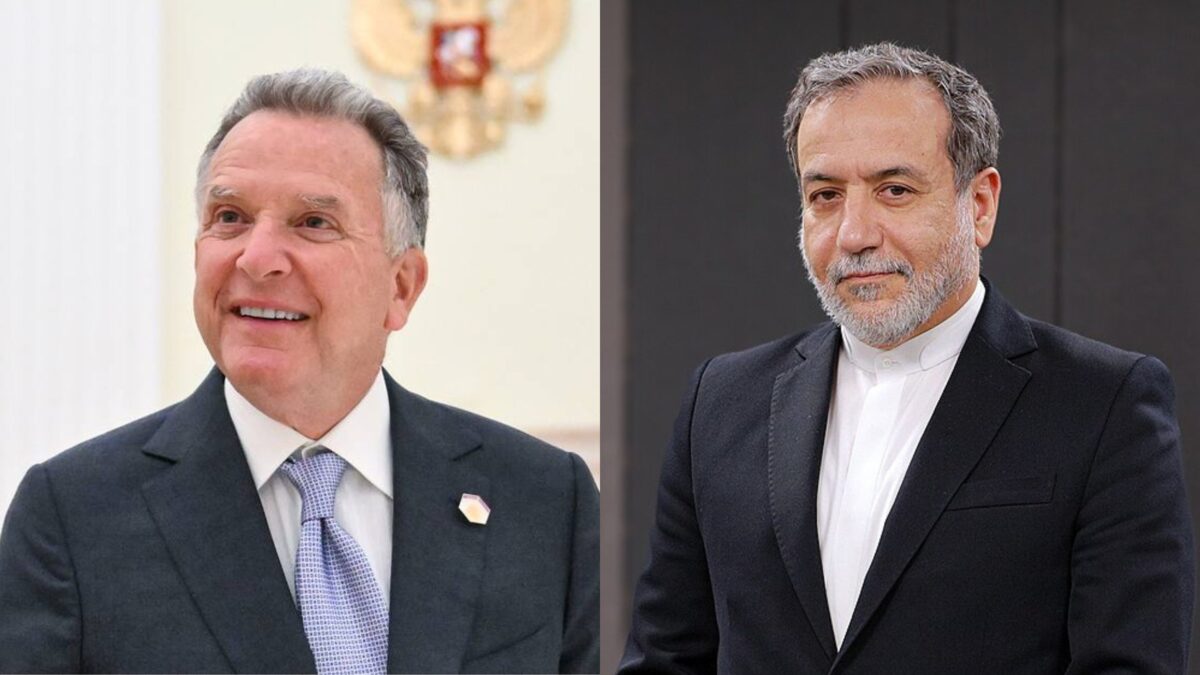
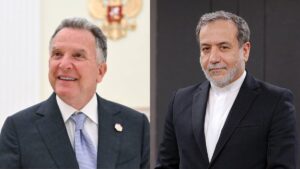
Aragchi and Witkoff meet in Geneva
Executive Summary
As US‑Israeli strikes against Iran, Lebanon (Hezbollah), and Yemen (the Houthis) appear imminent, this analysis dissects the possible scenarios — from full‑scale regional war to calibrated tit‑for‑tat exchanges. With dual carrier strike groups converging, diplomatic talks in Geneva hanging by a thread, and the US midterm elections looming, the margin for miscalculation is razor‑thin. The paper examines political constraints, red lines of key actors (Turkey, Gulf states, Russia, China), target selection, the evolving role of the Iranian air force, and the phased architecture of any military campaign. It concludes that a "contained degradation" strike package — targeting nuclear sites, missile infrastructure, and proxy nodes while preserving the Iranian state — is the most probable outcome, provided diplomacy collapses in the coming days.
Introduction
As US-Israeli strikes against Iran, Lebanon (Hezbollah), and Yemen (the Houthis) appear imminent, it is time to analyse the possible scenarios for this emerging conflict and determine whether it will escalate into a full-scale regional war or remain confined to limited, tit-for-tat exchanges between the US-Israel axis and Iran. Previous analyses have already outlined why such a confrontation seems inevitable. The United States has amassed massive air power in the region, with additional assets on the way to the Middle East, signalling preparation for a wide range of contingencies. The current force deployment already surpasses the scale seen during the 2003 Iraq invasion. One aircraft carrier strike group is in position, and another is approaching and expected to be operational in support of potential US actions by February 20.
Political constraints
Several critical factors shape the outlook. With US midterm elections approaching, President Donald Trump has no interest in a prolonged conflict with Iran. An extended war would likely be interpreted by Tehran as an effort to overthrow its government or fragment the state, prompting severe retaliatory measures. These could include attacks on oil infrastructure throughout the Middle East, the effective closure of the Strait of Hormuz, and strikes on critical assets of US-allied nations, triggering a severe global energy crisis. Such outcomes would sharply increase utility and gasoline prices in the US and globally, directly undermining the Trump administration's domestic priorities.
Escalation or tit-for-tat?
Iran has publicly declared it will reject any “limited strikes.” Yet historical patterns show Tehran often makes bold public statements while responding more pragmatically to diplomatic and strategic realities. The vast naval and air armada now assembled does not necessarily signal intent for a long-term campaign; rather, the US may calculate that overwhelming force could compel Iran to negotiate a new agreement addressing its ballistic missile program, nuclear ambitions, and proxy support for groups like Hezbollah and the Houthis. This would markedly reduce Iran's regional leverage and military strength, rendering it more vulnerable moving forward. The selection of targets within Iran will be a decisive factor. Strikes limited to military installations are one thing; expansion to critical civilian infrastructure could spiral uncontrollably, mobilizing widespread domestic unrest and protests in Iranian cities. Nuclear sites, however, have historically been treated as relatively "tolerable" targets by Tehran. The core objective would thus centre on denuclearizing Iran, substantially degrading its conventional military capabilities, and weakening its proxy network—without driving the regime into an existential corner that prompts desperate, asymmetric retaliation against sensitive regional targets.
Trust has been irreparably damaged since the JCPOA's collapse, and prior negotiations were disrupted by Israeli strikes. Any US-Iran deal would likely face immediate Israeli opposition or sabotage, potentially pulling the US back in if Israel exhausts its interceptor stockpiles (such as Arrow 2 and Arrow 3 systems) under sustained pressure. The US has already addressed this vulnerability by deploying multiple THAAD batteries to Israel and allied bases across the region.
Efforts to dismantle the Islamic Republic's governance and ideological foundation entirely risk severe fragmentation of the country. The regime retains a substantial domestic support base, and actions leading to its collapse would be perceived as profoundly hostile by many US allies—particularly the Arab Gulf states, which prioritize stability over regime change. However, allies are not the only ones who are opposing a serious fragmentation.
Foreign constraints
As long as the Kurdish issue remains a mutual security concern for both Iran and Türkiye, the two nations have strong incentives to cooperate in safeguarding their respective national interests. Türkiye views the potential emergence of a Kurdish state in a fragmented Iran as an acute security nightmare, one that could reignite separatist pressures domestically and along its borders. Beyond this, Ankara fears that state collapse in Iran would trigger a massive refugee influx, potentially involving millions of Iranians (and possibly Afghan refugees hosted in Iran) fleeing westward. Turkish officials and analysts have described this as a scenario that could dwarf the Syrian refugee crisis, overwhelming Türkiye's already strained economy, social fabric, and political stability. Despite the humanitarian pull and ethnic ties (particularly toward Turkic or Kurdish groups), Türkiye is neither economically, socially, nor politically prepared to absorb such a disastrous wave. Many displaced individuals would presumably seek to continue onward to Europe, further complicating Ankara's relations with the EU and exacerbating border pressures. As a strategically vital NATO ally, Türkiye's red lines cannot be lightly disregarded by the US, ignoring them risks accelerating Ankara's military tilt toward Russia and economic alignment with China. Consequently, US military actions likely to precipitate Iran's fragmentation remain highly improbable.
Russia has consistently condemned US and Israeli strikes as violations of international law, offering rhetorical support to Iran and proposing mediation roles, such as facilitating talks or backing UN resolutions for ceasefires. Moscow's engagement remains largely diplomatic, with no indications of direct military intervention or willingness to commit forces in defence of Iran against US or Israeli strikes. It favours agreements that lift sanctions on Iran while preserving Tehran's ballistic missile program and proxy networks. Recent moves, including discussions with Oman on potential Iranian concessions and warnings about nuclear risks, underscore Russia's interest in averting a broader war that could disrupt its own strategic priorities, including ongoing conflicts elsewhere. However, Russia could indirectly bolster Iran through increased arms supplies, intelligence sharing, or energy trade adjustments, testing Western resolve without committing to open confrontation. Joint naval exercises like the ongoing Maritime Security Belt 2026 in the Strait of Hormuz with Iran, Russia and China serve as symbolic shows of solidarity but are pre-planned and do not signal intent for direct military involvement in a conflict. Experts assess that Russia is unlikely to intervene militarily, prioritizing avoidance of escalation that could draw it into a wider confrontation while it manages other global commitments.
China however has much more to lose in a regionally destabilizing war compared to Russia, besides A 25-year comprehensive cooperation agreement signed between Iran and China in 2021, the Chinese are vulnerable given its position as the world's largest oil importer. Roughly 50% of its crude oil and 29% of its LNG imports transit the Strait of Hormuz from Persian Gulf sources. Even a temporary closure could disrupt over 20% of global oil trade, driving prices well above $100 per barrel, forcing Beijing to turn to expensive spot markets, draw down strategic reserves, accelerate domestic production, or ramp up pipeline imports (especially from Russia and Central Asia). This would impose substantial strain on China's economy, which is already navigating softer demand and global supply-chain pressures. Beijing has historically condemned military strikes as "adventurism," urged immediate de-escalation, and evacuated citizens during past flare-ups, while carefully avoiding direct material aid or intervention during active conflicts. Direct military involvement remains highly improbable. China did not forcefully defend Iran after the 2025 Israel-Iran war, lacks formal security guarantees with Tehran, and views prolonged US entanglement in the Middle East as paradoxically beneficial (diverting American resources from the Indo-Pacific). Participation in joint exercises like Maritime Security Belt 2026 is symbolic and pre-scheduled, not a signal of combat readiness. In a crisis, China would likely intensify diplomatic pressure, including private warnings to Tehran against Hormuz closure, which would harm Iran's own exports to China and pursue quiet mediation or behind-the-scenes efforts to keep energy routes open and avert catastrophic price spikes. At the same time, recent developments (particularly since January 2026) indicate a noticeable step-up in China's indirect and covert support for Iran, driven by the need to safeguard its energy lifeline and test domestic systems in a high-stakes environment. High-level reports point to transfers of advanced Chinese radars such as the YLC-8B and JY-27A platforms claimed to detect stealth aircraft like the F-35 series used by the US and Israel enhancing Iran's early-warning and air-defence resilience. Post-2025 conflict, Iran has reportedly acquired the HQ-9B long-range surface-to-air missile system (often via oil-for-weapons barter deals), marking a diversification from delayed Russian supplies and providing a significant upgrade over existing capabilities. Additionally, Chinese intelligence services (notably the Ministry of State Security's Ninth Bureau) have deepened counter-intelligence and counter-espionage cooperation with Tehran, focusing on dismantling Mossad infiltration networks which is a key vulnerability exposed in 2025. This covert assistance, technical transfers, sensor integration, and digital security aid remains deniable and short of overt commitment, allowing Beijing to strengthen a strategic partner while protecting its economic interests and avoiding direct confrontation.
The selection of targets within Iran will be decisive. Strikes limited to military installations are one thing; expansion to critical civilian infrastructure could spiral uncontrollably, mobilizing widespread domestic unrest and protests in Iranian cities. Nuclear sites, however, have historically been treated as relatively "tolerable" targets by Tehran. The core objective would thus centre on denuclearizing Iran, substantially degrading its conventional military capabilities, and weakening its proxy network, without driving the regime into an existential corner that prompts desperate, asymmetric retaliation against sensitive regional targets.
A New Front?
Outside Iran, multiple scenarios loom in Lebanon. Prior analyses by Praevisio suggested Syrian President Ahmed al-Sharaa (formerly Abu Mohammad al-Jolani) could play a pivotal role in Hezbollah's demilitarization. It would be illogical for the West to abandon Kurdish partners and grant al-Jolani, a former al-Qaeda affiliate unfettered legitimacy without significant quid pro quo. That could involve Syrian forces under his command crossing into Lebanon to target Hezbollah strongholds, conducting ground operations supported by Israeli airpower—or coordinated advances with Israel striking from the south while Syrian units move from the north and east. Such collaboration would confer the international legitimacy al-Jolani seeks to govern and rebuild Syria with Western backing. Airstrikes on Houthi positions in Yemen are also probable, especially if the group escalates in Iran's support by firing drones or ballistic missiles at Israel. These operations would not eradicate Houthi capabilities but would meaningfully degrade them. Iraq remains unpredictable. Iranian-aligned Shia militias have conducted limited actions in the past, but none have necessitated large-scale US or Israeli air campaigns.
The Phases of the Potential Strikes
The first phase of any US-Israeli strikes would almost certainly prioritize Suppression of Enemy Air Defences (SEAD) missions, drawing from lessons of the 2025 12-Day War (Operations Rising Lion/Midnight Hammer). This would involve F-35s (stealthy, with advanced EW/sensors), EA-18G Growlers for jamming, Tomahawk cruise missiles from subs/destroyers, and potentially B-1/B-2 bombers to systematically dismantle Iranian air defence networks—both land-based (e.g., remaining S-300/BAEQ systems, Bavar-373, Sayyad-series SAMs) and naval (e.g., coastal anti-air batteries or ship-mounted defences in the Gulf). The goal: achieve air superiority quickly by "kicking down the door" blinding radars, destroying command nodes, and neutralizing fixed/mobile SAM sites mirroring Desert Storm-style opening salvos and the F-35 SEAD role in Midnight Hammer. Iran's mobility and evasion tactics for surface-to-air missiles (SAMs) are a key variable. Systems like the Bavar-373 or HQ-9B equivalents are road-mobile on TELs (transporter-erector-launchers), allowing rapid shoot-and-scoot relocation to avoid detection/strikes. If Iranian operators demonstrate high skill, using decoys, frequent repositioning, terrain masking, and low-emission radar tactics they could prolong survivability, forcing repeated SEAD sorties and enabling intermittent skirmishing against US/Israeli airpower in a prolonged second phase. If SEAD achieves decisive victory early (as in 2025, where Israel degraded much of western Iran's IADS via airstrikes, covert drones, and ground teams), follow-on phases become safer and more effective.
Second phase targets would shift to military infrastructure, focusing on "accepted" or non-escalatory sites (i.e., not regime leadership, civilian population centres, or broad economic assets like oil refineries/terminals that risk Hormuz closure or global energy shock):
- Ballistic missile production facilities, storage depots, and launchers (to degrade rebuild efforts post-2025).
- IRGC/naval bases and command centres (especially coastal missile sites threatening Gulf shipping).
- Nuclear-related infrastructure (e.g., remaining enrichment cascades at Natanz/Isfahan, research labs, conversion facilities—historically "tolerable" as military targets).
- Conventional military depots (ammunition, fuel, logistics hubs).
- Radar and C2 nodes (for sustained IADS suppression).
- Proxy support nodes (e.g., arms transfer points to Hezbollah/Houthis, if linked).
This sequencing keeps the campaign contained: degrade capabilities decisively without pushing Iran to existential retaliation or fragmentation. If SEAD drags on due to effective Iranian mobility, the overall operation risks becoming costlier and longer potentially testing US political will amid midterm pressures.
The Role of the Iranian Airforce
Iran's air force would likely adopt a primarily defensive posture in any renewed conflict, acting as a complementary layer to its surface-to-air missile (SAM) network rather than seeking air superiority against superior US/Israeli fifth-generation fighters (F-35, F-22). Following the June 2025 12-day war (Operations Rising Lion/Midnight Hammer), which exposed vulnerabilities including damage to existing MiG-29s at bases like Mehrabad Russia delivered a batch of modernized MiG-29 fighters (likely SMT or upgraded variants) by September 2025. These arrived in Shiraz as a short-term bridge, per Iranian lawmakers (e.g., Abolfazl Zohrevand) and reports from Iran International, Newsweek, Forbes and others. While not the long-awaited Su-35s (deliveries still pending 2026–2028 due to Russian production constraints from Ukraine), the MiG-29s provide a modest boost. These fourth-generation jets are no match for stealth platforms in beyond-visual-range engagements, but they can operate similarly to Ukraine's older F-16s in defensive roles: low-altitude intercepts of drones, cruise missiles, and standoff munitions; point defence over key sites; and opportunistic skirmishing to disrupt enemy strike packages. Equipped with upgraded radars, electronic warfare suites, and air-to-air missiles (R-77, R-73), they could force attackers to expend resources on additional SEAD/escort missions or tie down assets in lower-threat airspace. This limited reinforcement fits Iran's asymmetric strategy: preserve scarce fighters for layered defence while relying on mobile SAMs (Bavar-373, HQ-9B), decoys, and electronic countermeasures to attrit incoming raids over time. It won't shift the airpower balance decisively but could complicate Phase 1 SEAD efforts and prolong attrition in a drawn-out campaign.
Conclusion
Considering all these elements the domestic political calculus in Washington, the hard red lines from Türkiye and Gulf allies against fragmentation, Russia's diplomatic restraint, China's high-stakes economic imperatives combined with its stepped-up covert support, and the multi-front proxy dynamics the picture is clear: neither the US nor its key partners seek a prolonged regional war or measures that risk massive conflagration and energy chaos. The most probable path, should Geneva talks collapse in the coming days, remains moderate but serious strikes: a joint US-Israeli campaign targeting nuclear remnants, ballistic missile production, IRGC/naval assets, and proxy command nodes decisive enough to force concessions, degrade capabilities, and reshape the regional balance toward Israeli dominance, yet calibrated to preserve Iran's governance intact and avoid pushing Tehran into existential desperation or Hormuz closure. This "contained degradation" scenario offers Washington and Tel Aviv a strategic victory without occupation or regime-toppling chaos. Yet the window is narrowing rapidly—with dual carrier strike groups now converging, Iranian drills in the Strait of Hormuz intensifying amid joint exercises with Russia and China, and odds of action reportedly as high as 90%—the risk of miscalculation remains real. Diplomacy's fuse is short; if carriers become the deciders rather than negotiators, even a "limited" exchange could spiral faster than anticipated.
References
https://trumpwhitehouse.archives.gov/presidential-actions/ceasing-u-s-participation-jcpoa-taking-additional-action-counter-irans-malign-influence-deny-iran-paths-nuclear-weapon/
https://www.timesofisrael.com/liveblog_entry/turkey-plans-buffer-zone-inside-iran-if-regime-falls-report/
https://www.timesofisrael.com/israel-running-low-on-arrow-interceptors-us-burning-through-its-systems-too-wsj/
https://www.armscontrolwonk.com/archive/1220527/exhaustion-and-inflection-estimating-interceptor-expenditures-in-the-israel-iran-conflict/
https://www.aljazeera.com/news/2025/6/23/can-iran-really-shut-down-the-strait-of-hormuz
https://www.rferl.org/a/iran-us-israel-strikes-war/33662293.html
https://news.un.org/en/story/2025/11/1166303
https://www.airandspaceforces.com/us-amasses-more-airpower-middle-east-iran/
https://www.france24.com/en/live-news/20260218-intense-us-naval-air-power-buildup-sets-stage-for-potential-iran-war
https://asiatimes.com/2026/02/supply-chains-and-chinas-hormuz-imperative/
https://www.bbc.com/news/articles/c78n6p09pzno
https://agsi.org/analysis/the-u-s-china-iran-oil-triangle-in-flux/
https://irangov.ir/detail/476761
https://www.reuters.com/world/middle-east/turkey-says-it-opposes-military-intervention-iran-priority-is-avoiding-2026-01-15/
https://moderndiplomacy.eu/2026/01/28/how-china-aims-to-block-mossad-operations-in-iran/
https://www.forbes.com/sites/pauliddon/2025/07/08/chinas-hq-9b-challenges-russias-middle-east-air-defense-market-share/
https://mei.edu/publication/25-year-iran-china-agreement-endangering-2500-years-heritage/
https://www.aljazeera.com/news/2022/1/15/iran-says-25-year-china-agreement-enters-implementation-stage#:~:text=Iran%20says%2025-year%20China%20agreement%20enters%20implementation%20stage,year%20%5BMajid%20Asgaripour%2FWest%20Asia%20News%20Agency%20via%20Reuters%5D
https://www.timesofisrael.com/how-israel-used-spies-smuggled-drones-and-ai-to-stun-and-hobble-iran/
https://united24media.com/latest-news/ukraines-f-16s-crush-russian-missile-barrage-shooting-down-34-of-35-russian-missiles-14504
https://www.forbes.com/sites/pauliddon/2026/02/18/russian-mi-28s-and-su-35s-wont-revitalize-irans-dilapidated-military/