Tonight's Address: What to Expect
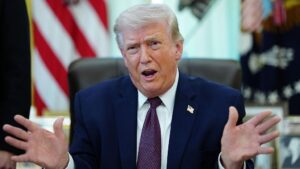
Tonight at 8:00 PM CT, Donald Trump is expected to deliver a significant address regarding Operation Epic Fury and, perhaps, the de-facto restructuring of NATO's role in Western security architecture. Several major outlets — including Reuters and Politico — have suggested the speech may signal an end to the operation. Such an outcome appears highly unlikely given the current strategic realities on the ground.
After decades of Israeli lobbying, and with a firm presence secured inside the current administration, a rapid US withdrawal after only a month of hostilities is politically implausible. Without achieving at least a minimal, face-saving outcome — a so-called pyrrhic victory — the prospects for peace in the near term remain exceedingly low. The far more probable trajectory is that tonight serves as the launchpad for a new phase: one in which Trump seeks to rally domestic support for a deepened and expanded campaign, potentially including clearly defined ground operations, despite their questionable strategic viability.
The Strategic Impasse
No decisive objectives have been achieved. At the same time, Israel is only at the beginning of what appears to be a prolonged campaign aimed at razing and occupying southern Lebanon — potentially transforming it into a Gaza-style buffer zone. Operations there are expected to extend over several months, as Israeli forces encounter sustained and heavy resistance, including ongoing losses in both armour and personnel.
Iran, for its part, is unlikely to entertain any form of de-escalation without incorporating Hezbollah into negotiations — something that remains conspicuously absent from current diplomatic dynamics. It is difficult to envision a scenario in which the United States halts operations inside Iran while Tehran continues to strike Israel, particularly when Israel itself is not directly engaged in any formal talks. Rather than de-escalation, the more plausible trajectory is a transition into a new phase — one in which the scope of the conflict expands rather than contracts.
A month of hostilities without decisive objectives achieved, with Israel just beginning in Lebanon and Iran unmoved — this is not the profile of a conflict approaching resolution. It is the profile of one entering a more dangerous phase.
Iran's Hormuz Revenue Model and the Gulf's Hardening Position
The Gulf States are hardening their position. Following Iranian signals that it seeks to assert sovereign control over the Strait of Hormuz in coordination with Oman, regional dynamics are shifting further toward confrontation. Such a move would effectively place Gulf oil exports under Iranian regulatory authority — creating a new and durable economic model for Tehran rather than a temporary instrument of pressure.
Reports already suggest that Iran is charging up to $2 million per oil tanker transiting the region, mirroring the revenue model of Egypt through the Suez Canal, which generates over $800 million per month. This development changes the strategic calculus fundamentally: it transforms the blockade from a coercive tool into a structural revenue stream that Tehran has every incentive to sustain. It also means the Gulf States themselves — whose economic survival depends on unencumbered export routes — now have a profound strategic and economic interest in more decisive hostilities against Iran, not a negotiated pause that leaves this new model intact.
Further escalation raises the risk of disruption at additional critical maritime chokepoints, most notably the Bab-el-Mandeb Strait. Were that corridor to come under sustained pressure, the resulting shock to global trade flows and energy markets would push already fragile economies measurably closer to recession.
NATO's Uncertain Night
There is also a real possibility that tonight NATO will de-facto cease to exist as a functioning collective defence framework. The structural strains on the alliance — American unilateralism in the conduct of Operation Epic Fury, the absence of meaningful consultation with European members, and Trump's longstanding hostility to burden-sharing arrangements he views as American subsidisation of European security — have been accumulating for months. Tonight's address may crystallise them into something irreversible.
What that means in practice is not the formal dissolution of the treaty but its hollowing out: a NATO that exists on paper while its mutual defence commitments become operationally unenforceable, its command structures ignored, and its political credibility exhausted. For Europe, already absorbing an energy shock from Gulf escalation and facing a continent-wide defence spending reckoning, such an outcome would arrive at the worst possible moment.
Nonetheless — this night will be historical. Whatever is announced at 8:00 PM CT, the address will mark a threshold. The question is only which direction the threshold is crossed in.
Hope for the best. Prepare for the worst.
Note: This assessment was written on 1 April 2026, prior to tonight's address. All assessments represent the analytical judgement of the author and do not constitute investment or policy advice.