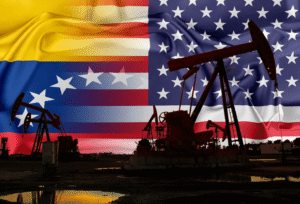
The Case of Venezuela and Structural Constraints on Policy Change
Would a future change of administration in Washington lead to a rollback of U.S. policy in Venezuela, or are such interventions effectively irreversible? The United States has developed principles and strategic assumptions that guide its foreign policy and understanding of national security. While administrations may differ rhetorically, the underlying strategic logic often remains unchanged.
A core aspect of U.S. strategy is the avoidance of sudden, unmanaged changes in global power balances. This approach implies that, once an intervention took place in a foreign state, it is unusual for an abrupt reversal once domestic leadership in the U.S. changes.
Venezuela represents a case in which U.S. strategic interests significantly constrain the scope for policy reversal, even under a democratically elected administration as it could happen in the upcoming 2028 election. While rhetoric may vary, certain strategic assets remain untouched.
A rapid disengagement could create a power vacuum involving renewed Chinese or Russian involvement in the region, undermining the credibility of U.S. commitment. Overall, U.S. foreign policy demonstrates clear path dependence.
The United States has, over the past century, developed a set of principles and strategic assumptions that guide its foreign policy and understanding of national security. While the administrations in power, whether democratic or republican, may differ rhetorically, the underlying strategic logic often remains unchanged. The reason for this is the maintenance of global stability to avoid the emergence of power vacuums that may be utilized by perceived hostile entities.
A core aspect of U.S. strategy is the avoidance of sudden, unmanaged changes in global power balances. History shows that interventions are designed to shape the long-term geopolitical environment, and short-term opportunistic ambitions are no commonality. Whether in the post-World War II period or recent engagements in the Middle East, Washington always prioritized the prevention of instability detriment to its strategic or national interests. This approach implies that, once an intervention took place in a foreign state, it is unusual for an abrupt reversal once domestic leadership in the U.S. changes.
A democratically elected president for instance may differ in tone, prioritizations both domestically and abroad, but the institutional and doctrinal framework encompassing the U.S. role abroad limit the scope for a rollback from previous foreign policy. Preventing power vacuums and safeguarding the established status quo are of utmost priority. In essence, Washington’s foreign policy apparatus, including long-term intelligence assessments, creates a structural framework that preserves the current strategic landscape. The key question is not simply whether a new administration desires to alter foreign policy, but whether it can do so without jeopardizing core strategic interests.
Venezuela represents a case in which U.S. strategic interests significantly constrain the scope for policy reversal, even under a democratically elected administration as it could happen in the upcoming 2028 election. While the rhetoric and overall agenda may vary, certain strategic assets may remain untouched.
From a great-power competition perspective, Venezuela manifests a very sensitive role in the region. Over the past decades it served as a political and economic entry point for Russia and China into what the U.S. considers its own strategic backyard. Chinese investments into infrastructure, telecommunications, and energy, combined with Russian military cooperation and arms sales, transformed Venezuela into a regional actor with significant influence on U.S. security concerns. A rapid disengagement on behalf of Washington could create a power vacuum involving renewed Chinese or Russian involvement in the region, undermining the credibility of U.S. commitment to the region.
Historically, prevention of emerging hostile powers in the region has always been a core U.S. interest, regardless of the administration in power. It should also be noted that past Democratic administrations under Biden and Obama have at times taken a more confrontational stance towards rival powers like Russia, than Republicans. Therefore, the resistance towards rival powers might even intensify.
Resource considerations further stress U.S. interests in the consolidation of regional influence. In times of global supply-chain fragmentation and intensified competition with China, Venezuela’s vast reserves of oil, gas, and critical minerals, become both economically and strategically relevant. The current situation allows the U.S. to shape future market access and deny entry for certain actors they do not desire. Maintaining leverage in this regard perfectly aligns with U.S. national security priorities.
While a Democratic government in Washington might emphasize multilateral engagement, sanctions relief, or diplomatic harmonization, nothing would change regarding great power rivalry, regional stability and resource security. Such continuity is rooted in the institutional nature of U.S. national security decision-making, where long-term intelligence assessments, defense planning, and bureaucratic structures constrain abrupt or far-reaching policy reversals.
Overall, U.S. foreign policy demonstrates a clear path dependence: once strategic positions are established, reversals are rare, time-consuming and risky.