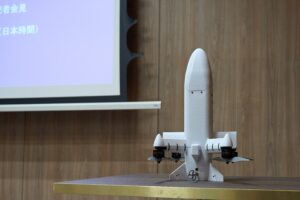
What Terra Drone Announced
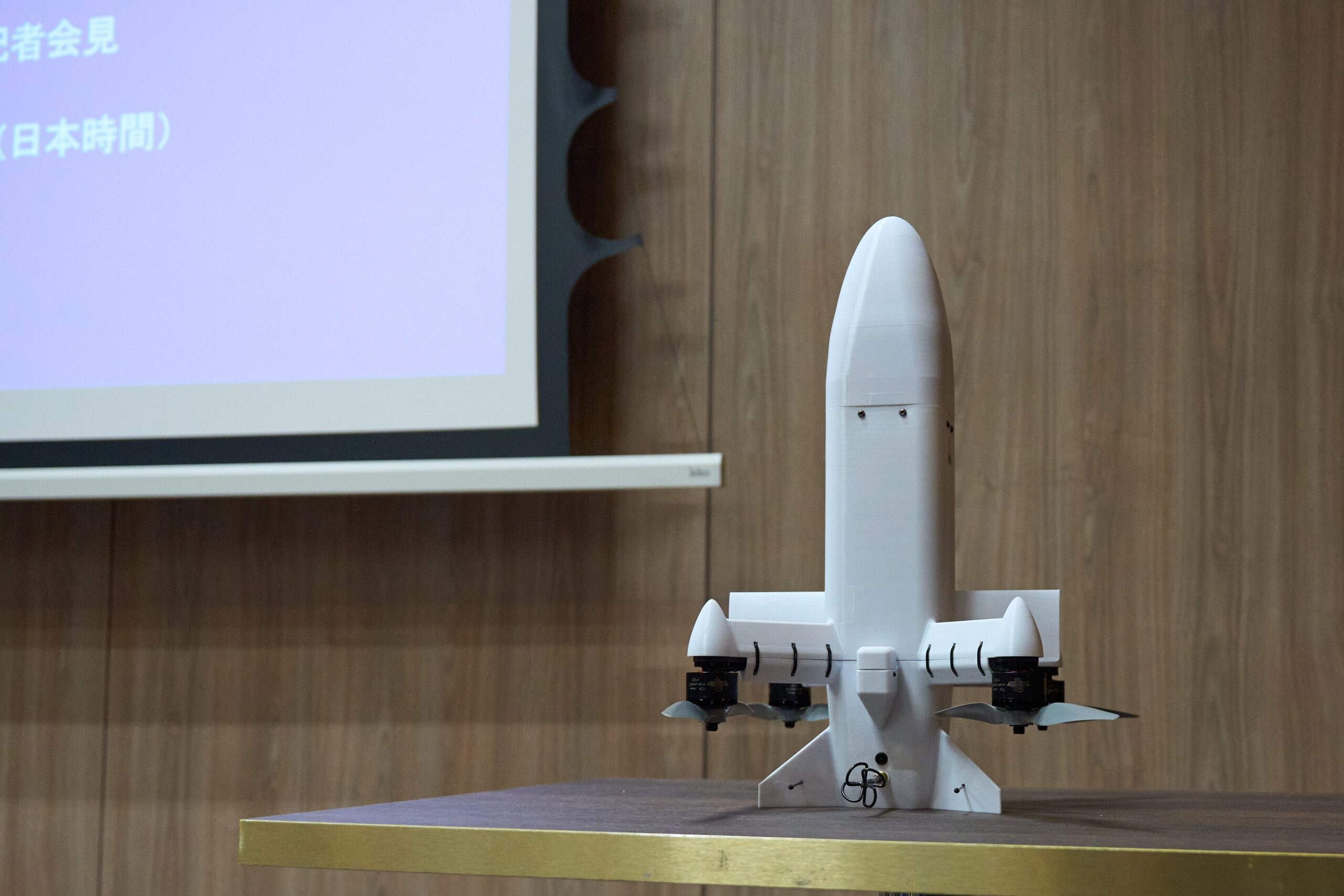
On 28 April 2026, Terra Drone Corporation — headquartered in Shibuya, Tokyo — published a press release confirming that its Terra A1 interceptor drone had demonstrated the ability to respond to long-range unmanned aerial threats under actual operational conditions.[1] The company released accompanying footage of the interception. The press release does not identify the location, the operator, or the target drone by name. It describes the target generically as "a long-range unmanned aerial threat." However, contextual indicators — the operational partnership with Amazing Drones, a Ukrainian firm; the timing; and the visual characteristics of the intercept — are consistent with Ukrainian airspace and a Russian military UAV as the target.
The Terra A1 is a joint development between Terra Drone and Amazing Drones, the latter a portfolio company of Terra Inspectioneering, itself a Terra Drone subsidiary. The system is positioned explicitly as a cost-effective alternative to conventional interception measures: Terra Drone notes that many countries have responded to long-range UAV threats using interceptor missiles costing hundreds of millions of yen per unit, and frames the Terra A1 — at approximately JPY 400,000 (roughly $2,500) per deployment — as a materially more sustainable solution. The press release describes the combat footage as "one real-world example that addresses this shared global challenge" and explicitly frames it as a marketing asset for future procurement decisions.
| Developer | Terra Drone (Japan) / Amazing Drones (Ukraine) |
| System type | Counter-drone interceptor UAV |
| Deployment cost | ~JPY 400,000 (~$2,500) per use |
| Target class | Long-range unmanned aerial vehicles |
| Combat status | Confirmed — operational footage released April 28, 2026 |
| Production plans | Mass production in Japan and Ukraine under consideration |
The Non-Lethal Classification and Its Limits
Japan maintains a formal policy against the direct supply of lethal weapons to Ukraine, rooted in its broader post-war constitutional framework around arms exports. Terra Drone's implicit defence of the Terra A1's deployment rests on classifying the system as non-lethal: it targets unmanned aircraft, not people, and its stated function is defensive interception rather than offensive strike. On those terms, the company's position has a degree of legal coherence.
The difficulty lies in what "non-lethal" means in practice at scale. The Terra A1's core capability — tracking, closing, and destroying an airborne target — is technically transferable to targets other than UAVs. The system's guidance, propulsion, and intercept logic do not inherently distinguish between a reconnaissance drone and a different category of aerial object. Critics of the non-lethal classification argue that the distinction becomes meaningfully thinner once a system is in mass production, widely deployed, and subject to the kind of rapid operational adaptation that characterises modern drone warfare. Ukraine's own experience since 2022 has demonstrated how quickly drone systems developed for one purpose are modified for another.
The gap between a drone designed to intercept UAVs and one capable of engaging other targets is narrower than the non-lethal classification implies — and narrows further when the system is being produced in the conflict zone itself, under the operational pressures of a live war.
Ukraine as a Commercial Testing Ground
The Terra Drone announcement reflects a pattern that has become increasingly visible over the course of the conflict: private defence technology companies — including firms from countries whose governments maintain formal restrictions on lethal weapons transfers — are using Ukraine's active combat environment as a live proving ground. The "combat-proven" designation that Terra Drone now attaches to the Terra A1 is not incidental. It is, as the press release states explicitly, a commercial asset. In defence procurement markets, particularly in regions where rapid adoption decisions are made at the operational level rather than through long central government tender processes, evidence of real-world performance carries significant weight.
Terra Drone's stated intention to establish mass production capacity in Ukraine itself adds a further dimension. Manufacturing in-country shortens supply chains, reduces export control exposure for individual component shipments, and deepens the commercial relationship between the company and the Ukrainian defence establishment. It also makes the system's further development more directly responsive to Ukrainian operational feedback — which, given the intensity and pace of drone warfare in the current conflict, represents a significant technological advantage in export markets facing similar threat environments.
The broader implication is straightforward: the formal boundaries of Japanese government policy on lethal weapons transfers to Ukraine are not the relevant constraint for what is actually flowing into the conflict. Private companies, operating within the technical definition of non-lethal systems, are making procurement, deployment, and production decisions that cumulatively constitute a meaningful and growing contribution to Ukraine's air defence capability. Whether that represents a policy gap to be closed or a deliberate feature of how allied governments manage the constraints of their own stated positions is a question that the Terra A1 case brings into focus, but does not resolve.
Note: This intelligence note was completed on 4 May 2026 and reflects information available as of that date. The target drone's identity and the precise location of the intercept have not been confirmed by Terra Drone or any official source. Assessments represent the analytical judgement of the author. This note does not constitute investment or policy advice.