
Origins and Ambitions
The origins of the OTS trace back to the Nakhchivan Agreement signed in 2009, which established the Cooperation Council of Turkic Speaking States, more commonly known as the Turkic Council. From its inception, the organization was envisioned as a broad framework to promote collaboration in fields ranging from foreign policy and economic development to transportation, education, and culture. This process culminated in 2021 when the Turkic Council formally transformed into the Organization of Turkic States. Early summit declarations contained notably ambitious economic objectives; for instance, the 2011 Almaty Declaration described the overarching goal as the realization of the free movement of goods, capital, services, and technology. Yet, unlike integration projects built around binding supranational institutions or collective security commitments, the OTS focused strictly on creating frameworks for dialogue and coordination while preserving the independent foreign policies of its members.
The Era of High Expectations vs. Political Rhetoric
As the organization rebranded in 2021, public discourse increasingly outpaced its official agenda. Many commentators, politicians, and members of the public came to view the OTS as the foundation of a much more ambitious geopolitical project. This trend was particularly visible in Türkiye and Azerbaijan. Public discussions routinely touched upon ideas extending well beyond official objectives, including proposals for a common Turkic currency, closer financial coordination, common defence initiatives, a common bank, and even the eventual emergence of a unified "Turkic Army".
These expectations were reinforced by official rhetoric from several member states that occasionally encouraged highly ambitious interpretations of the organization's future. Turkish President Recep Tayyip Erdoğan frequently presented cooperation among Turkic states as a notable achievement of Turkish foreign policy and as evidence of Türkiye's increasing political and cultural influence across Eurasia. Similar integrationist narratives were prominently championed within Azerbaijan.
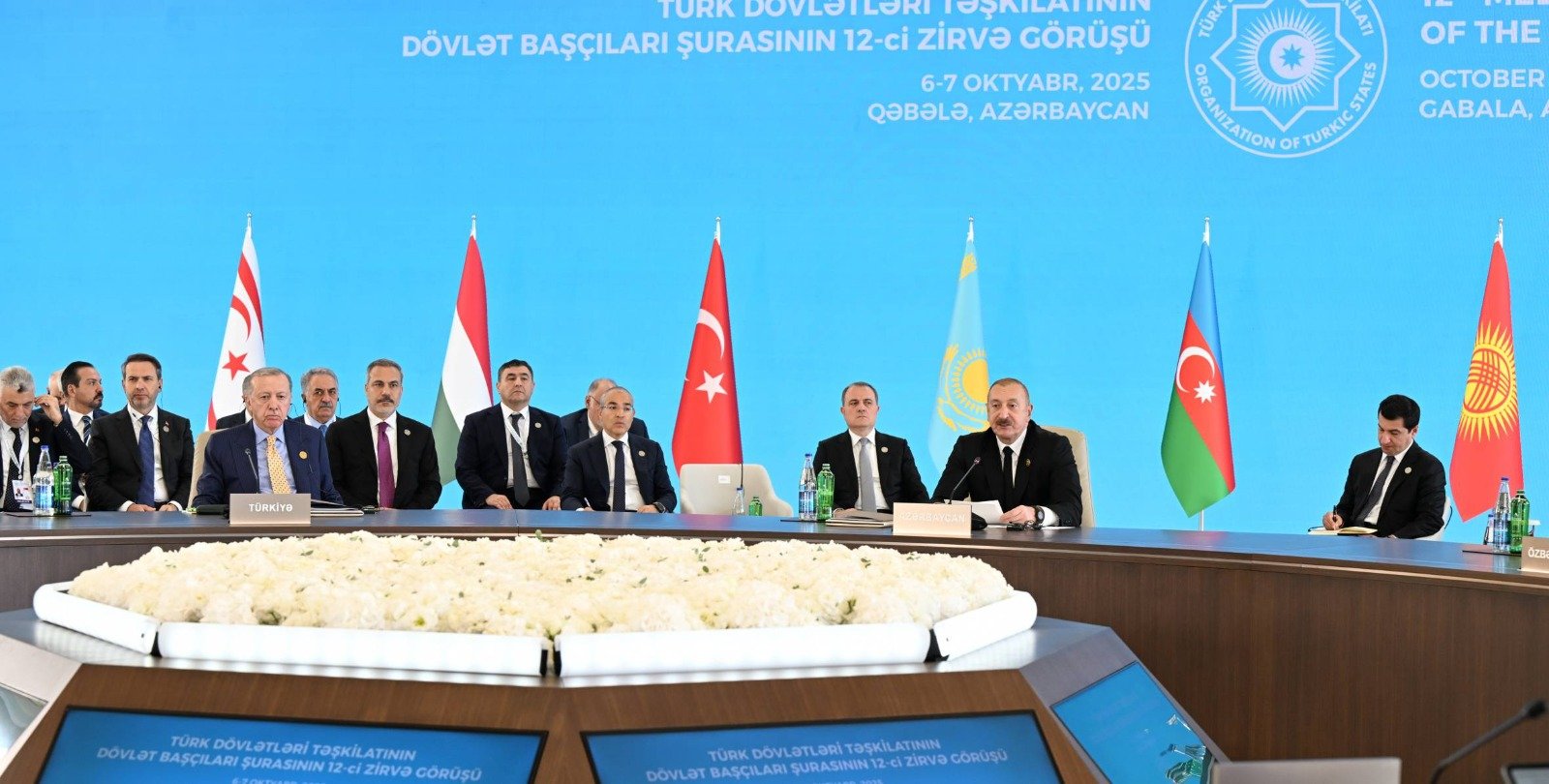
Notably, Azerbaijani political commentator and former member of parliament Rasim Musabayov described the OTS as an institutional structure that could play a major role in the future unification of Turkic states, explicitly referring to it as a prospective political, economic, and military union. Such statements reflected a broader current of domestic optimism that viewed the organization as the actual institutional nucleus of a future Turkic geopolitical bloc. Yet despite these extensive expectations, a sharp distinction remained between public discourse and official policy, with formal documents remaining tightly focused on consultation rather than supranational governance.
What the OTS Actually Achieved
This is not to say that the organization has not developed any functioning institutional framework or produced tangible results. Economic cooperation has emerged as one of the most active domains of OTS activity, with a consistent focus on trade facilitation, investment, customs cooperation, and transport connectivity. In particular, the growing strategic importance of the Middle Corridor linking Europe and Asia through the South Caucasus and Central Asia has significantly enhanced the relevance of this economic coordination. The most substantial institutional achievement in this field has been the establishment of the Turkic Investment Fund in 2023. Created with an authorized capital of approximately US$600 million, the Fund represents the first joint financial institution established by the Turkic states and serves as a concrete mechanism capable of supporting joint regional projects through direct financial instruments.
In the cultural and educational fields, the OTS has utilized shared linguistic, historical, and cultural ties to promote a variety of initiatives. Student exchanges, academic cooperation programmes, and heritage preservation projects have become regular features that foster people-to-people contacts and build a broader sense of community among participating societies.
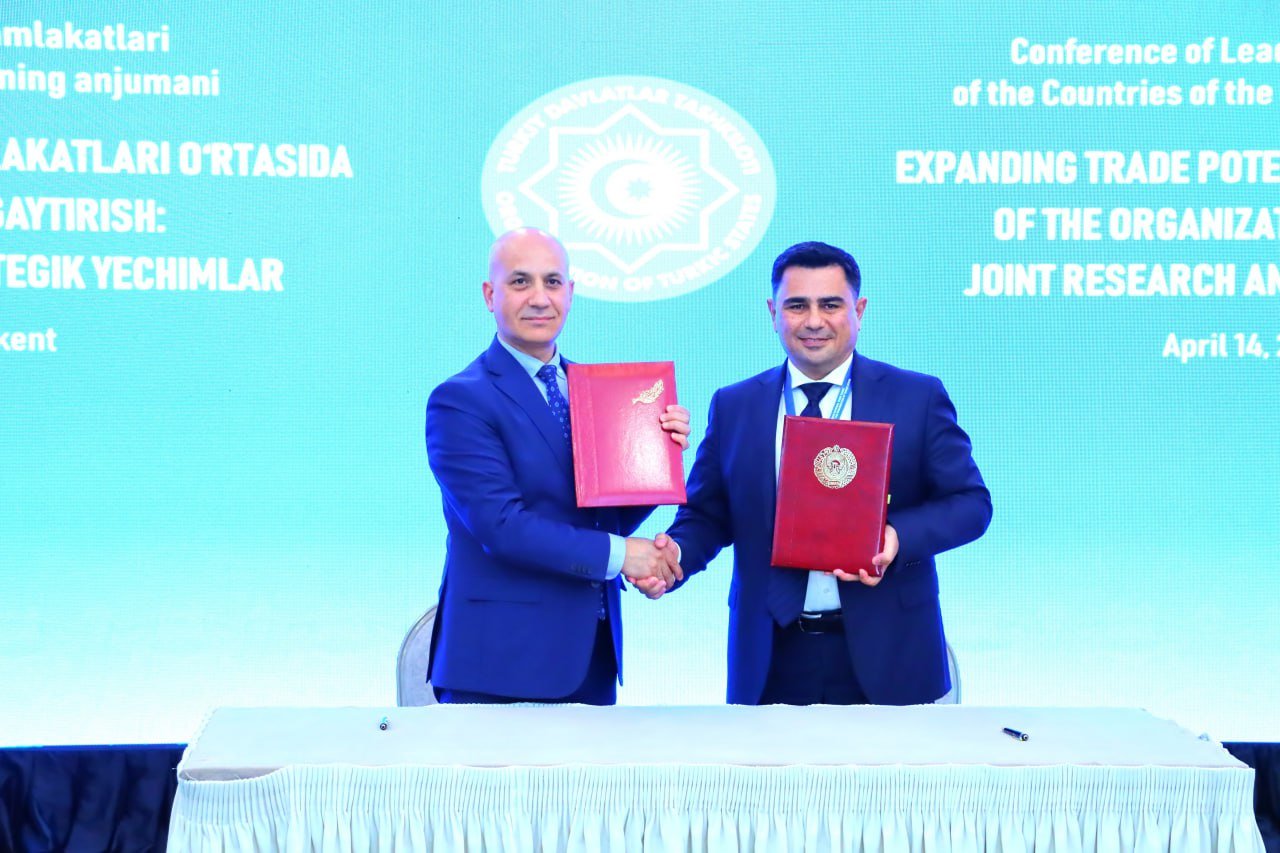
Concurrently, the OTS has gradually expanded its role as a platform for political consultation. Regular meetings of heads of state, foreign ministers, and security council secretaries have created institutionalised channels to coordinate positions on regional developments. While the 2024 Bishkek Summit identified the defence industry as a field for enhanced cooperation, this broadening agenda should not be interpreted as the emergence of a collective defence arrangement. Rather, the organization functions primarily as a durable consultative mechanism, providing member states with flexible channels to explore opportunities for sector-specific cooperation.
The Implementation Gap in Summit Declarations
Despite these tangible achievements, a closer examination of OTS summit declarations reveals a clear gap between official ambitions and institutional realities. While early documents occasionally employed language suggestive of deep integration, subsequent declarations have increasingly shifted toward procedural, consultative terminology dominated by expressions such as "commend," "recognize," "support," and "welcome." One of the clearest examples of this implementation lag can be found in the economic sphere. More than a decade after the 2011 Almaty Declaration envisioned the free movement of goods, capital, and services, no customs union or common market has emerged. Instead, the practical economic agenda remains confined to trade facilitation and transport connectivity rather than structural integration.
A similar pattern is observable even in educational and cultural initiatives, where highly publicised projects intended to strengthen a shared identity have struggled to match official rhetoric. The Common Turkic History Textbook, frequently cited as a landmark educational milestone, failed to achieve universal adoption among member states despite years of institutional promotion. This recurring tendency to prioritise dialogue over execution became particularly awkward in the 2024 Bishkek Declaration, which stressed the necessity of setting "more ambitious goals" even as many long-standing, basic targets remained only partially fulfilled.
Why Deeper Integration Never Materialized
The structural limitations of the OTS are fundamentally defined by the broader geopolitical realities and strategic calculations of its member states, who consistently prioritise national autonomy over collective alignment. This restraint is exceptionally clear in the organization's approach to the region's major powers, most notably Russia and China. Several OTS members maintain crucial economic, political, and security ties with Moscow. The emergence of a strongly political or military-oriented Turkic bloc would introduce significant risks into their bilateral relations. As a result, the OTS has carefully avoided positions that could generate friction. Following Russia's annexation of Crimea in 2014, the organization limited itself to calling for a peaceful dialogue, issuing no direct criticism. Following the 2022 full-scale invasion of Ukraine, any explicit references to the conflict vanished entirely — this despite the organization's declarations constantly reaffirming its commitment to the principles of sovereignty and non-intervention.
This geopolitical caution contrasts sharply with the organization's willingness to take explicit stances on other international issues, such as supporting Azerbaijan's control over Nagorno-Karabakh, addressing the Kyrgyz-Tajik border dispute, commenting on Syria and Afghanistan, or condemning attacks in Palestine. The selectivity is not accidental. It maps almost precisely onto where Moscow's interests begin and end.
Similar constraints arise from relations with China, which has become an indispensable economic and infrastructure partner for many OTS member states. Beijing has demonstrated considerable sensitivity regarding questions of ethnic identity and cohesion, particularly in Xinjiang, where recent legislation such as the Ethnic Unity Law reflects continued efforts to promote integration and strengthen national unity. While there is little evidence that China directly shapes OTS policy, policymakers across the Turkic world are likely aware that a highly politicised pan-Turkic project could generate concerns in Beijing. Given China's growing economic importance in Central Asia and Eurasia, this reality provides an additional incentive for member states to pursue a cautious and pragmatic approach to cooperation.
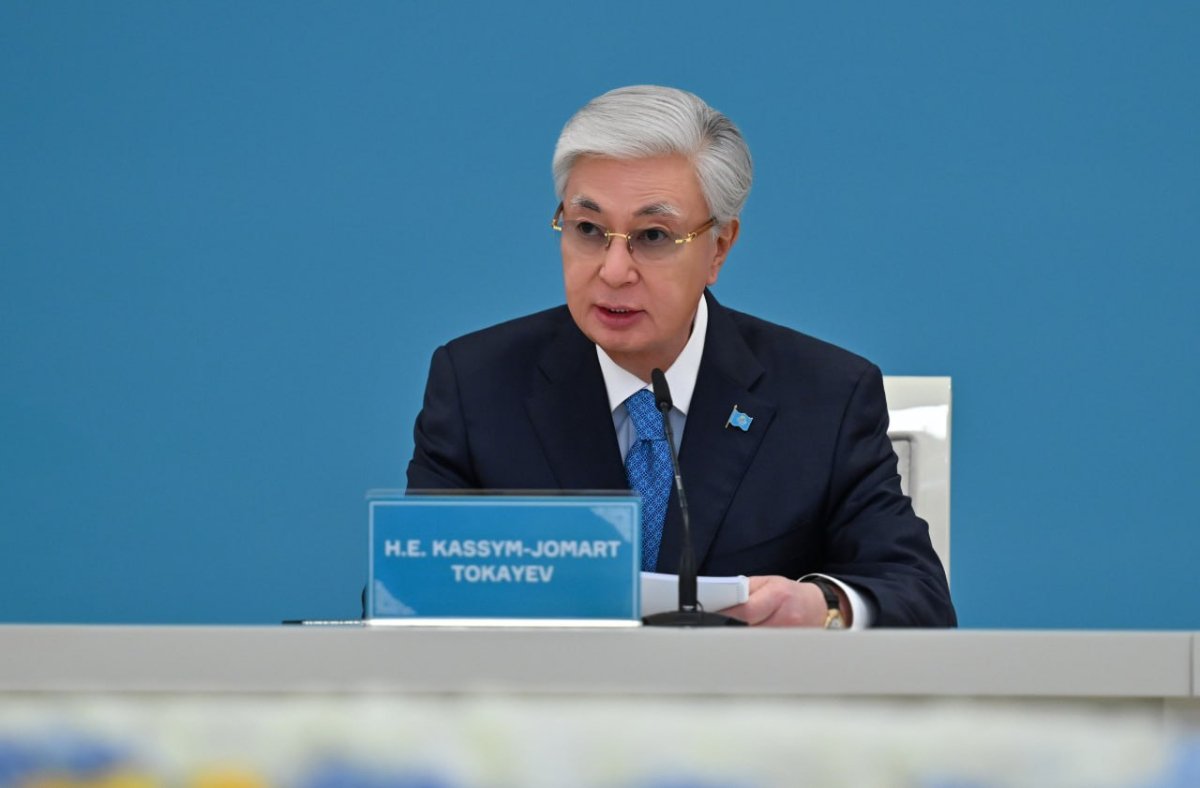
The definitive limits of the organization were explicitly reinforced during the informal OTS summit held in Turkistan. There, Kazakhstan's President Kassym-Jomart Tokayev stated explicitly that the OTS is not a geopolitical project or a military organization, but rather a practical platform restricted to trade, technology, digital transformation, and cultural-humanitarian cooperation.
The fragility of political unity is further illustrated by the Cyprus issue. For years, summit declarations consistently referred to the Turkish Cypriots as "an equal and constituent partner in Cyprus" and expressed clear symbolic solidarity with their community. However, recent decisions by several member states to strengthen diplomatic and economic relations with the Republic of Cyprus represent a significant shift. By effectively recognising the Republic of Cyprus as the sole internationally recognised government on the island, these states demonstrate that immediate national interests routinely take precedence over pan-Turkic political solidarity.
Despite repeated declarations emphasising economic integration and increased trade among member states, the economic realities of the region remain largely unchanged. While trade between OTS members has grown and is economically meaningful in several cases, member states continue to be more deeply integrated into broader global economic networks than into an exclusively Turkic economic space. As shown in Table 1 below, external actors such as Russia, China, the European Union and other global markets remain among the most important economic partners of nearly all OTS members. Even where intra-OTS trade is significant, as in the case of Kyrgyzstan, it complements rather than replaces broader economic relationships. This suggests that while the OTS has contributed to greater economic connectivity among its members, it has not fundamentally altered the external trade orientation of its constituent states.
| Country | Main Non-OTS Trade Partners | Approximate Share | Main OTS Trade Partners | Approximate Share |
|---|---|---|---|---|
| Azerbaijan | Italy, China, Russia | ~45% of total trade | Türkiye, Uzbekistan, Kazakhstan | ~10–15% of total trade |
| Kazakhstan | China, Russia, EU | ~55%+ of total trade | Türkiye, Uzbekistan | ~10–15% of total trade |
| Uzbekistan (2024) | Russia, China, Afghanistan, EU | ~45% of total trade | Kazakhstan, Türkiye, Kyrgyzstan | ~12% of total trade |
| Kyrgyzstan (2024) | China, Russia | ~22% of exports and ~60% of imports | Kazakhstan, Türkiye, Uzbekistan | ~41% of exports and ~23% of imports |
| Türkiye | EU, Russia, China, USA, UK | ~60%+ of total trade | Azerbaijan, Kazakhstan, Uzbekistan | ~4% of exports and ~2% of imports |
A Look at the Future
The future of the Organization of Turkic States will be shaped not by grand integration projects, but by the continuation of the pragmatic, sector-specific trajectory it has established over the past decade. There is little reason to expect the OTS to lose relevance; economic initiatives, cultural programmes, and transport corridor developments will remain important features of regional interaction. Mechanisms like the Turkic Investment Fund will continue to provide concrete platforms for joint economic cooperation. However, the strategic imperative of maintaining stable relations with external giants like Russia and China, combined with the explicit preference of member states to preserve their foreign policy autonomy, guarantees that the organization will not evolve into a highly politicised or military alliance.
For most member states, participation in the OTS serves as one component of a broader, carefully balanced, multi-vector foreign policy strategy. Speculative comparisons with the European Union, discussions of common currencies, or collective defence arrangements will remain confined to public rhetoric rather than official policy. Instead, the OTS has successfully secured a lasting and durable role as the principal framework for flexible consultation, economic connectivity, and diplomatic coordination among Turkic states across Eurasia.
Note: This article was completed on 28 May 2026. Trade data references in Table 1 draw on 2024–2025 national statistics from the listed statistical agencies and should be interpreted as indicative estimates. The views expressed are those of the author.