What Happened
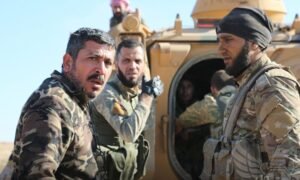
According to several sources in Syria and Türkiye who spoke to the Praevisio Institute For Geopolitical Affairs on condition of anonymity, Türkiye is currently preparing to send an initial batch of hundreds of hardened fighters from SNA-linked divisions and factions to Yemen. These sources, who requested anonymity for safety reasons, describe an operational planning phase that is already well underway. The fighters are described as battle-hardened veterans with more than a dozen years of combat experience in Syria, and they would be deployed to confront the Houthi offensive, which has intensified dramatically in recent weeks. Houthi forces have advanced along Yemen's western coast toward the strategic Bab al-Mandab Strait and stepped up missile and drone attacks deep inside Saudi Arabia, including a ballistic missile targeting Riyadh and a drone intercepted south of Mecca.[1]
The Mecca Joint Defence Agreement, signed on 7 August 2026 between Saudi Arabia, Türkiye, and Pakistan, established a trilateral framework for collective deterrence, stating that an armed attack against any one of the three countries will be regarded as an attack against all three.[1] The pact is grounded in Article 51 of the UN Charter, which recognises the inherent right of states to individual and collective self-defence.[2] Within hours of its signing, the "Islamic NATO" label began circulating.[2] The three countries began building the pact's institutional structure later that month, agreeing in Istanbul to strengthen military coordination and defense-industrial cooperation and establish a permanent secretariat in Saudi Arabia.[1]
According to the same sources, recruitment incentives for the Yemen deployment are already being discussed. Higher bonuses of up to $3,500 have been promised to fighters willing to deploy, significantly above the $2,000 monthly salary that was standard for the Libyan and Nagorno-Karabakh deployments. Imams have also been enlisted to motivate the fighters, framing the Houthis as a sectarian threat to the Ummah in much the same way the 2020 Karabakh recruitment was framed. One source emphasised that many of these veterans know no other life than war; with the Syrian conflict largely ended and only sporadic violence remaining, they are seeking to continue their former lives as fighters. The combination of financial incentive, religious framing, and the absence of an alternative livelihood makes the recruitment pipeline particularly effective.
The Factions: Who Would Be Deployed
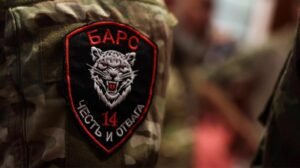
The groups most consistently named across reporting from UN experts, Syrians for Truth and Justice (STJ), SOHR-related accounts, journalists, and later Armenian judicial materials no longer exist as independent entities. They have been formally dissolved and reorganized into new divisions of the Syrian army. However, this integration has been a process of rebranding rather than dismantling. The personnel, command structures, and Turkish ties of these factions remain largely intact, and the networks are still available for mobilization.[3]
Named Factions: Current Status (September 2026)
Formally integrated, networks intactThe Precedent: Nagorno-Karabakh, 2020
This would not be the first time Türkiye has used its Syrian proxies to support an ally. During the 2020 Nagorno-Karabakh war, hundreds of Syrian fighters were sent to Azerbaijan to fight as frontline soldiers against Armenian forces. Armenian court documents have provided an unusually granular look at the infrastructure behind that policy, which was apparently sanctioned by President Erdogan and carried out by his intelligence agency MIT and the Turkish military.[6]
According to Armenian court files, recruiters linked to the Sultan Suleiman Shah Brigade enlisted hundreds of Syrians, trained them in northern Syria, moved them across the Turkish border in a clandestine operation, transported them between Turkish airports on civilian aircraft, and eventually flew them to Azerbaijan, where Turkish and Azerbaijani military personnel helped organise their deployment.[6]
The Armenian prosecution alleged that Muhammad al-Jasim, better known as Abu Amsha, the commander of the Sultan Suleiman Shah Brigade, had been recruited by Turkish intelligence services and was acting on instructions to recruit fighters for Azerbaijan's campaign.[6] The indictment said Abu Amsha and his associates targeted men struggling financially in areas of northern Syria under the influence of Turkish-backed armed groups. One defendant was allegedly offered $2,000 a month to undergo military training and then travel to Azerbaijan.[6] Similar sums were offered for Syrian fighters transported to Libya to fight alongside Turkish-backed factions in the post-Gaddafi period.[7] In the Libyan case, the first fighters to arrive were from the Sultan Murad division, mostly composed of Turkmens, and MIT allegedly organised several meetings of this type with tribal or military leaders to mobilise an army of mercenaries.[7]
The Armenian court files also revealed that recruits were promised a $100 bonus for presenting the severed head of an Armenian, and were supplied with long-bladed knives.[8] The mechanism — recruitment through Turkish-backed factions, clandestine border crossing, civilian air transport, and military training — was developed across Syria and Libya before being applied to Azerbaijan, and it is directly transferable to the current Yemen preparations.
Imams were used to encourage soldiers to go and fight for Azerbaijan, with religious authorities declaring at the time that the "heathens of Armenia" were threatening the ummah. This same line can be used against the Houthis, who are Zayidi Muslims rather than Sunni. Zayidism is a distinct branch of Shia Islam, and the Houthi movement is predominantly Zaidi Shia.[9] While mainstream Sunni scholarly opinion does not generally declare Zayidis to be non-Muslims — they are considered "people of the qibla" — there exists a minority view within Sunni jurisprudence that regards them as outside the fold, and this view can be mobilised for recruitment purposes in the same way the "heathen Armenia" framing was used in 2020.[10]
The Larger Precedent: Libya, 2020
Before Nagorno-Karabakh, before the current preparations for Yemen, there was Libya. The Turkish intervention in the Libyan civil war in early 2020 was the first large-scale deployment of Syrian proxy forces outside Syria, and it established the template that has since been replicated. Between January and the end of 2020, Türkiye transferred thousands of Syrian fighters from the SNA to Libya to fight alongside the Government of National Accord (GNA) against Khalifa Haftar's Libyan National Army (LNA).[11]
The scale was significant. In the first three months of 2020 alone, the Pentagon assessed that Ankara had deployed between 3,500 and 3,800 paid Syrian mercenaries.[12] By August 2020, the U.S. Defense Department's inspector general reported that Turkey had sent at least 5,000 Syrian mercenaries to Libya, with several hundred regular Turkish troops deployed alongside them as operators and technicians for air defence systems.[13] Other estimates placed the total number considerably higher, with figures ranging from 13,000 to more than 16,000 over the course of the intervention.[14]
Syrian Fighters Deployed to Libya (2020)
Turkish-backed SNA personnelThe recruitment infrastructure was run through the same networks that are now being activated. According to Syrians for Truth and Justice (STJ), the recruitment targeted fighters of the SNA as well as members of the Free Police and Security Forces, with many fighters arriving in Libya with their families and acquiring Libyan nationality.[15] The Libyan operation was overseen by Turkey's National Intelligence Organization (MIT), working in coordination with the Turkish military and private military companies including SADAT.[16]
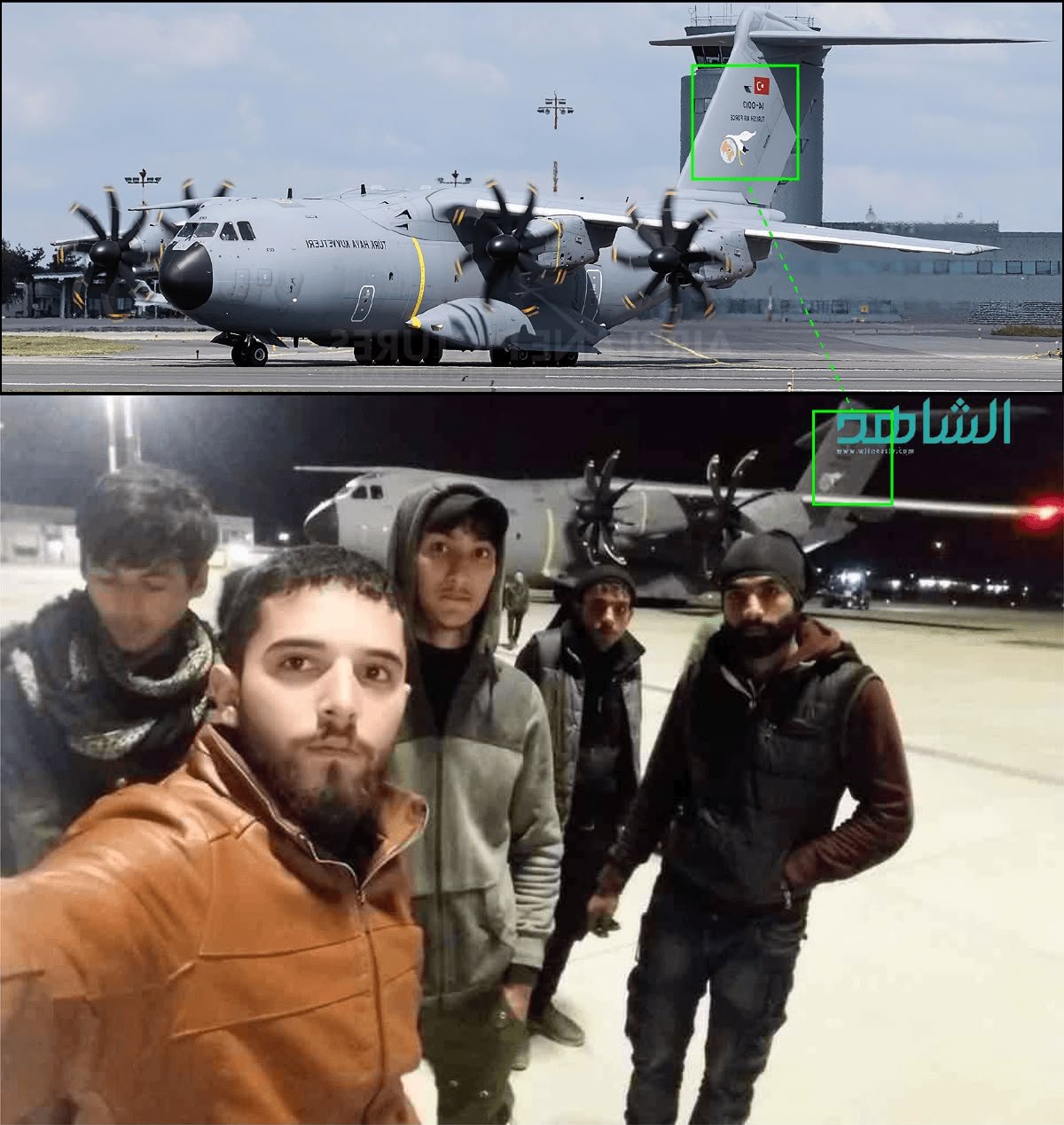
Visual evidence of the airlift began emerging in late 2019. Fighters affiliated with the SNA were photographed at Tripoli airport in late 2019, having been airlifted by a Turkish Air Force Boeing A400M. According to a former Turkish Air Force pilot, two Airbus A400Ms of the Turkish Air Force transferred almost 250 fighters of the Syrian National Army from Gaziantep airfield to Istanbul, from where they were to be transferred to Tripoli by passenger airplanes within hours.[17] STJ later verified a photograph of members of the Syrian Free Police on board a Turkish A400 military aircraft heading to Misrata, Libya, confirming that these military transport flights were not only carrying fighters but also police personnel on training missions.[18] The fighters were subsequently geolocated in Tripoli, in territory controlled by the GNA, confirming their arrival and deployment in the Libyan capital.
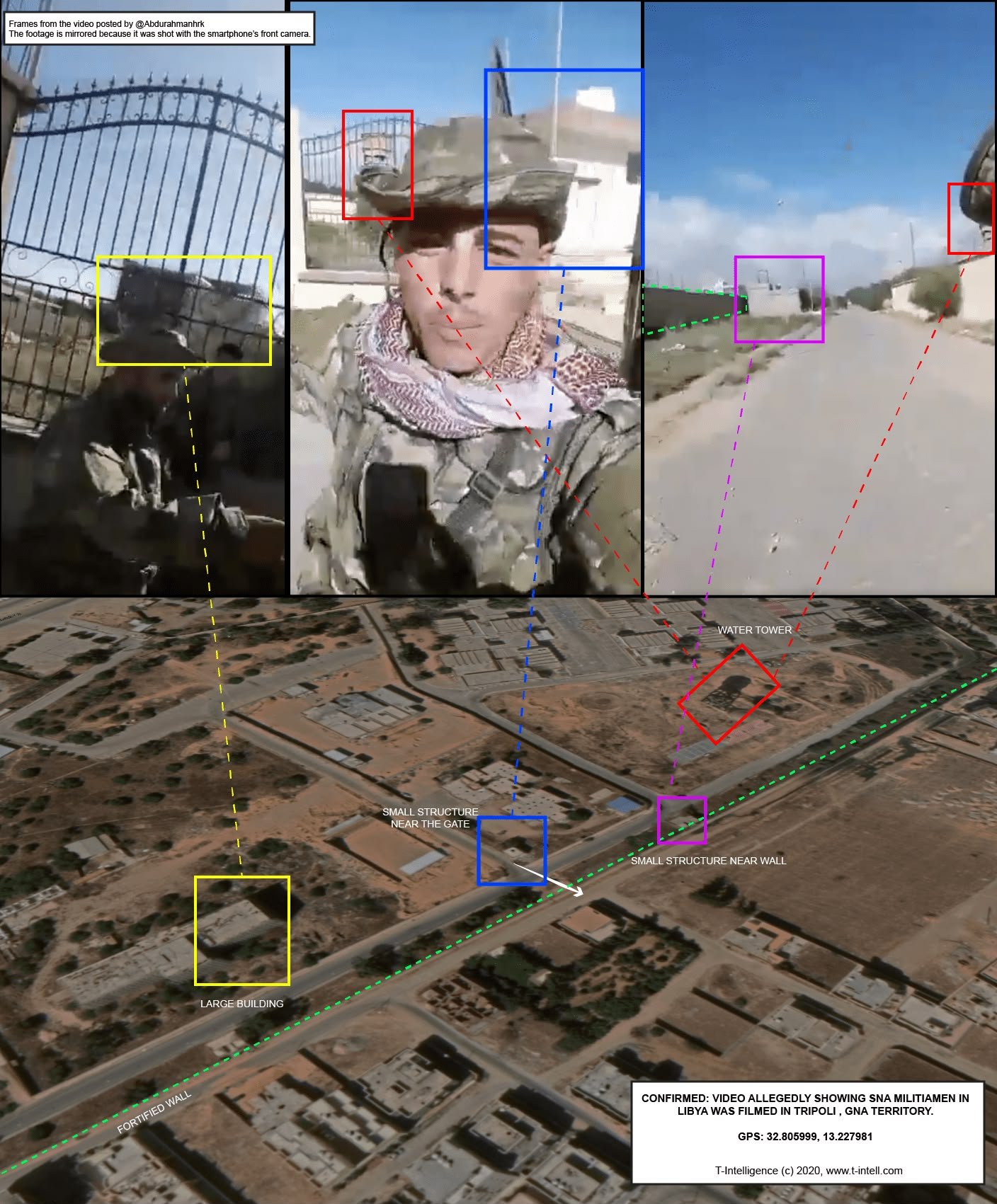
The factions involved in Libya read like a roster of the same groups now being named for Yemen. According to multiple sources, the militias responsible for recruitment and handling of fighters included the Sultan Murad Division, the Hamza Division, the Mu'tasim Division, and the Suleiman Shah Brigade (al-Amshat).[19] The first fighters to reach Libya were from the Sultan Murad Division, mostly composed of Turkmens.[20] Members of Faylaq al-Majd and Jaysh al-Islam also travelled to Libya under the supervision of Mu'tasim.[19]
The financial incentives offered in Libya established the template that was later used in Azerbaijan and that will presumably be used for Yemen. Fighters were offered $2,000 a month for three- to six-month contracts, with the salary increasing the longer the recruit chose to remain.[21] The recruitment was conducted by SNA personnel in the three Turkish-controlled areas of northern Syria and among refugees in southern Turkey, with a relative lull in the fighting against the Assad regime making it possible to divert fighters elsewhere.[19] Turkish officials eventually confirmed the presence of SNA fighters in Libya. On 21 February 2020, President Erdogan stated that "Syrian teams" from the SNA were carrying out missions in Libya.[19]
The Libyan deployment also established that these fighters would be used in direct combat against a well-equipped adversary backed by a rival power. In Libya, the Syrian proxies fought alongside Turkish drone and air defence units against Haftar's LNA, which was backed by Russian Wagner Group mercenaries, Sudanese fighters, and Egyptian and Emirati air power.[22] The Turkish-backed forces, with Syrian fighters forming the backbone of Operation Volcano, eventually broke Haftar's offensive and pushed his forces back from the outskirts of Tripoli.[23] The Libyan operation demonstrated that Syrian proxies, when properly supported by Turkish air power and technical assets, could be decisive on the battlefield. It was this lesson that was applied in Nagorno-Karabakh, and it is this lesson that would be applied in Yemen.
The use of Syrian fighters in Libya was controversial from the start. The U.S. Defense Department's inspector general noted that their presence was likely to degrade security and generate backlash from the Libyan public, and AFRICOM described the Syrian mercenaries as "inexperienced, uneducated, and motivated by promises of considerable salary."[13] The Libyan National Army claimed that over 70 Syrian mercenaries were killed in the fighting near Tripoli by early February 2020 alone.[24] But the operation succeeded in its immediate objective: Haftar's offensive was broken, and the GNA survived. For Ankara, the Libyan intervention proved that the Syrian proxy model worked — it was cheap, deniable, and effective. Every deployment since has followed the same pattern.
Türkiye and Iran: Shared Interests, Divergent Paths
This would mean that Türkiye is preparing the first move in favour of the Mecca Pact without directly getting involved with Iran, as Türkiye and Iran also have vast shared interests, mostly regarding rogue Kurdish separatist groups that are present on their borderlands. The deployment of Syrian proxies allows Ankara to support Riyadh under the terms of the Mecca Pact while avoiding a direct confrontation with Tehran that would jeopardise cooperation on Kurdish security issues.
The Mecca Pact has faced criticism for its perceived inaction. Turkish Foreign Minister Hakan Fidan defended the alliance on 21 September, saying it was unfair to judge the pact against Yemen's decade-long conflict.[25] "No one criticizes NATO as a 'paper tiger,' but when it comes to a newly formed defense alliance, they point to a 10-year crisis, the Yemen crisis, and say, 'Look, this doesn't work,'" Fidan said. "We have only just begun."[25] Fidan also said Türkiye had considered such an arrangement for five or six years.[25]
Fidan also stated that Türkiye would meet military needs under the alliance if required. "We are in solidarity on this issue. As the Mecca Alliance, we are following it closely. There may be military needs, especially in certain technical matters. We would have no problem meeting them," he said.[26]
Pakistan, the third signatory, has taken a more cautious public line. Islamabad has ruled out immediate military action against the Houthis, with officials stressing that the pact's wording suggests it is essentially a defensive agreement that would only be activated if Saudi Arabia itself were attacked, rather than requiring Pakistan to join a Saudi offensive inside Yemen.[27] Pakistani Defence Minister Khawaja Asif warned that the pact could come into force if there were a "contagion" of the Yemen conflict to Riyadh.[28] This divergence in posture between Ankara and Islamabad is relevant: Türkiye's proxy approach allows it to act while Pakistan debates, and it is Türkiye, not Pakistan, that has the ready-made infrastructure of Syrian factions to draw upon.
The Denials
Syria has officially denied that it would allow troops to be sent to Yemen. A formal Saudi request to organise and deploy a Syrian force was "politely" rejected, according to Syrian sources speaking to Türkiye Today. "This issue has been exhausted and is over. The Saudi request was made several months ago. Syria politely turned it down, saying it was focused on its own military organization process and did not intend to enter a conflict as a third party," one source said.[29]
The source added that the Syrian government was not preventing individuals from travelling outside Syria to participate in the conflict, but stressed that Damascus would not accept responsibility for such individual involvement.[29] Turkish sources also denied claims that Ankara had played a role in transporting or organizing Syrians for deployment to Yemen. "We have no involvement in this matter. Syria and Saudi Arabia are sovereign countries," the Turkish sources said.[29]
However, all the mentioned groups above also strongly denied their troops were being recruited to go fight in Nagorno-Karabakh in 2020, even as Armenian court documents and subsequent investigations documented the pipeline in granular detail.[6] The same pattern held in Libya: both the SNA and the GNA categorically denied the transfer of fighters, even as the evidence mounted.[30] The GNA went so far as to issue a formal statement dismissing reports of a Syrian presence in Tripoli as "baseless" and "smear campaigns" targeting the UN-recognized government.[31] The precedent of official denials being contradicted by documentary evidence should be weighed carefully when assessing the credibility of the current denials.
Analytical Judgement: The pattern of official denial followed by documented evidence — as seen with the Libyan and Nagorno-Karabakh deployments — suggests that the official denials from Damascus and Ankara should be treated with caution. The operational infrastructure that was used to move Syrian fighters to Libya and Azerbaijan remains in place, and the same commanders and networks are still active, now embedded within the formal structures of the Syrian army. The August 2026 demotions have not severed these networks; they have only changed the titles.
Conclusion
Strip away the official denials and the boilerplate statements, and what remains is a consistent picture: Türkiye is preparing to use the same proxy infrastructure it has employed in Libya and Nagorno-Karabakh to meet its obligations under the Mecca Pact without directly confronting Iran. The factions named — Sultan Murad, Hamza Division, Sultan Suleiman Shah Brigade, Faylaq al-Majd, and Faylaq al-Sham — no longer exist as independent entities. They have been formally dissolved and reorganized into new Syrian Army divisions. But their command structures, their personnel networks, and their Turkish ties remain largely intact. The August 2026 demotions of key commanders were an attempt to centralize control, not to eliminate the networks.
The Libyan deployment was the first and largest of these operations. Thousands of Syrian fighters were transferred to Libya in 2020 — 3,500 to 3,800 in the first quarter alone by the Pentagon's count, at least 5,000 by August by the Defense Department inspector general's assessment, and possibly more than 13,000 over the full year according to other estimates. They were drawn from the same factions now being named for Yemen: Sultan Murad, Hamza Division, Suleiman Shah Brigade, Mu'tasim, Faylaq al-Majd, and Jaysh al-Islam. The visual evidence is unambiguous: fighters affiliated with the SNA were photographed at Tripoli airport in late 2019 after being airlifted by a Turkish Air Force A400M, and later geolocated in GNA-controlled territory in the Libyan capital. The recruitment was overseen by MIT and private military companies like SADAT, the salaries were $2,000 a month, and the fighters were deployed under Turkish military supervision to break Haftar's offensive on Tripoli. The operation succeeded, and it established the template that was applied in Nagorno-Karabakh the following year. The Nagorno-Karabakh deployment, in turn, demonstrated that the same mechanism could be used to support an ally's war in a third country with religious framing added on top. Both precedents are directly transferable to Yemen.
The religious framing that was used to mobilise fighters against Armenia can be repurposed against the Houthis, who are Zayidi rather than Sunni. And the financial incentives that were used in Libya and again in 2020 — salaries of $2,000 a month — are still available, with sources now indicating that bonuses of up to $3,500 are being offered for the Yemen deployment. The veterans themselves, many of whom know no other life than war, are seeking to continue their former lives now that the Syrian conflict has largely ended. The Mecca Pact's first major move is not whether Türkiye or Pakistan will directly intervene in Yemen. It is whether they can deploy the proxy infrastructure they have spent a decade building, tested first in Libya and then in Nagorno-Karabakh, to support their allies while maintaining the fiction of non-involvement. On the evidence from Syria and Türkiye, that process is already underway.
Note: This intelligence note was completed on 22 September 2026. The information regarding Türkiye's preparations to deploy Syrian fighters to Yemen is based on sources in Syria and Türkiye who spoke to the Institute on condition of anonymity for safety reasons. These sources could not be independently verified by the Institute. Saudi Arabia, Syria, and Türkiye have all issued denials regarding organized deployments of Syrian fighters to Yemen. The Libyan and Nagorno-Karabakh precedents are documented in investigative reporting, judicial materials, and corroborated by multiple open-source investigations. The factions named in this note have been formally dissolved and reorganized into new Syrian Army divisions; however, their personnel, command structures, and Turkish ties remain largely intact. This note does not constitute military, legal, or policy advice.